rgba(0,0,0,0.1);” />
An Engineer’s Guide to Solid Copper vs CCA Cables: Repair, Maintenance, and Compliance
In my line of work as an NSI and SSAIB certified Security and Networking Engineer based in Newcastle upon Tyne, I have seen almost every physical layer failure imaginable. From poorly planned containment systems in historic Quayside buildings to suspect, unlabelled bundles stuffed into server racks in modern business parks, the physical layer is where a network succeeds or fails. Among all the issues I diagnose, one recurring hazard stands out: the misuse of Copper Clad Aluminium (CCA) cabling in structured networks, particularly when paired with high-draw Power over Ethernet (PoE) devices or critical security infrastructure.
For any professional installer or network administrator, understanding the structural, electrical, and mechanical differences between pure solid copper and CCA is not just academic—it is a matter of building safety, system reliability, and regulatory compliance. This comprehensive guide details how to identify, repair, maintain, and replace these two cabling mediums, keeping your installations in line with British Standards, NSI Grade 2 or 3 security guidelines, and SSAIB requirements.
Understanding the Technology: Solid Copper vs CCA
To appreciate why Solid Copper and Copper Clad Aluminium perform so differently, we must look at their metallurgy and how high-frequency signals and DC electricity travel through them.
Solid Copper Cabling
Solid copper conductors consist of 100% pure, oxygen-free copper. Pure copper is highly ductile, possesses excellent electrical conductivity (second only to silver), and boasts high tensile strength. In high-performance data cabling standards—ranging from Cat5e and Cat6 up to 10-Gigabit-capable Cat7 and Cat8 systems—solid copper is the benchmark. Because data signals travel near the surface of the conductor due to the “skin effect” at high frequencies (measured in hundreds of Megahertz), and DC power utilizes the entirety of the conductor’s cross-section, solid copper excels at carrying both high-bandwidth data and heavy electrical power simultaneously without excessive attenuation or thermal buildup.
Copper Clad Aluminium (CCA) Cabling
CCA cables are a compromise designed to reduce manufacturing costs. They feature an aluminium core covered with a thin outer sleeve of copper, typically accounting for only 10% to 15% of the conductor’s volume. While high-frequency AC data signals can flow relatively unimpeded along the outer copper skin, low-frequency and DC power signals are forced to travel through the aluminium core. Aluminium has 61% of the conductivity of copper, which means its DC resistance is roughly 55% to 60% higher than a solid copper conductor of the same gauge. This high resistance leads to significant voltage drops over distance and converts wasted electrical energy directly into heat.
Furthermore, aluminium is physically brittle. It suffers from high rate of flex fatigue, meaning it breaks easily when bent, and is highly susceptible to galvanic corrosion when exposed to moisture, as the two dissimilar metals (copper and aluminium) react chemically in a wet environment.
Security & Regulatory Compliance: NSI, SSAIB, and EN 50131
In the UK, installing CCA cable in security and life-safety applications is a major breach of professional standards. When executing a system design under NSI Grade 2 or Grade 3 guidelines, or preparing an installation for an SSAIB audit, the physical integrity of the transmission path is paramount. Under BS EN 50131 (the European standard for Intruder and Hold-up Alarm Systems) and BS 7671 (the IET Wiring Regulations), cabling must be fit for purpose and capable of sustaining operational voltages without excessive drop-offs.
If you are deploying IP CCTV systems, the stability of your infrastructure is critical for compliance with the code of practice set out by the UK Gov Surveillance Commission. This guidance stresses the need for resilient, high-availability video feeds that do not drop frames or experience power-induced dropouts. CCA cables, due to their high DC resistance and tendency to degrade at termination points, fail to meet these stringent reliability standards. Using them in a commercial or public-space security install puts your certification—and your clients’ insurance coverage—at direct risk.
PoE Power Budgets, Heating, and Fire Hazards
The rise of high-power PoE standards has turned the Solid Copper vs CCA debate into a serious fire safety conversation. Let us look at the power envelopes we regularly deploy:
- PoE (802.3af): Delivers up to 15.4W at the source, operating over two pairs.
- PoE+ (802.3at): Delivers up to 30.0W at the source, ideal for PTZ cameras and access control readers.
- PoE++ (802.3bt Type 3 & 4): Delivers up to 60W or 90W respectively, utilizing all four pairs to power active display screens, heavy-duty heaters, and high-performance wireless access points.
When you pass these currents through a cable bundle, the physics of Joule heating ($I^2R$) apply. Because CCA has much higher electrical resistance ($R$), a bundle of CCA cables running PoE+ or PoE++ will experience significant thermal elevation. In enclosed spaces, such as ceiling voids, risers, or containment trunking, this heat build-up can melt the outer PVC sheathing, leading to conductor short-circuits, permanent insulation degradation, and in extreme cases, catastrophic electrical fires. For this reason, British Standards explicitly prohibit the use of non-compliant, non-copper conductors for PoE delivery within structured cabling networks.
Technical Specification Comparison Table
The table below highlights the crucial differences between solid copper and CCA cabling across key technical parameters:
Testing, Identifying, and Troubleshooting
As a network engineer, you will often inherit systems built by others. You must be able to quickly determine if you are dealing with solid copper or a substandard CCA installation before committing to a maintenance SLA or certifying a network.
On-Site Identification Techniques
- The Scratch Test: Take a utility knife and gently scrape away the top layer of the conductor’s metallic surface. If the deep orange-brown colour remains, it is pure copper. If a bright, silvery-white metal is exposed beneath, you have caught a CCA cable.
- The Weight Test: Aluminium is significantly lighter than copper. A standard 305m (1000ft) box of pure copper Cat6 cable weighs approximately 11kg to 14kg. A 305m box of CCA Cat6 will feel noticeably light, weighing in at only 5.5kg to 7kg.
- The Burn Test: Using a lighter, apply a direct flame to an exposed conductor. A solid copper wire will glow red, heat up, and retain its shape. A CCA wire will quickly degrade, melt, and snap as the aluminium core liquefies at a much lower temperature (660°C compared to copper’s 1085°C).
Field Testing with a Cable Analyser
While visual tests are helpful, the ultimate proof lies in active RF and electrical testing. A basic wiremap tester will not tell you if a cable is CCA; it will only verify pin-to-pin continuity. To expose CCA, you must use a certified level III/IV field tester, such as a Fluke DSX-8000 CableAnalyzer, to perform a full certification suite. Pay close attention to the DC Loop Resistance. If a 60-metre run returns resistance figures expected of a 100-metre run, the cable is almost certainly CCA. High resistance values cause high insertion loss and signal attenuation, which can lead to dropped packets and erratic performance on high-speed data links.
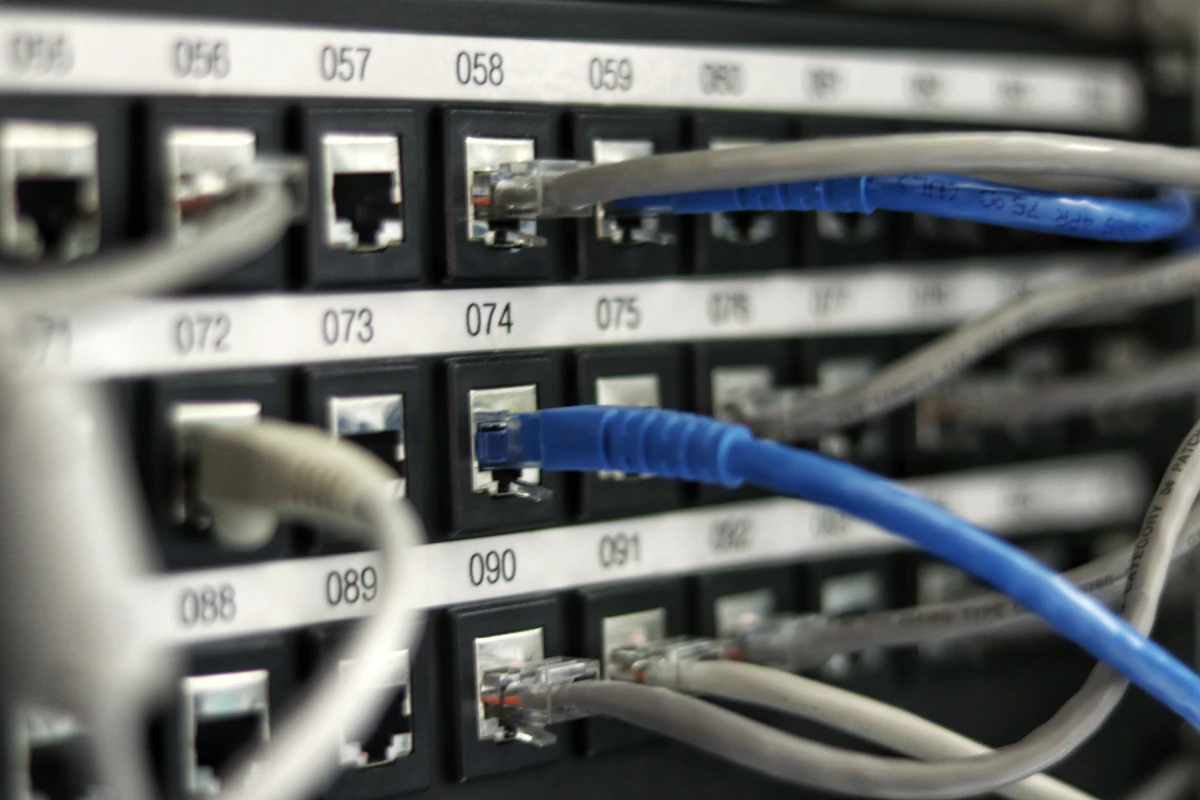
When documenting your tests and mapping out the network topology back to the comms room, keeping clear records is essential. Poor labeling can turn troubleshooting into a nightmare. Be sure to follow our internal guide on the Best Practices for Labeling Data Cabling Systems in Racks to ensure your panels, ports, and cable pathways are systematically mapped for future maintenance runs.
Repair and Maintenance Protocols
When physical damage occurs on a cable run—such as a drill puncturing a drywall cavity, rodent damage, or stress fractures inside conduit—how you resolve the issue depends entirely on the cable material. Below are the practical procedures for handling both scenarios.
Scenario A: Repairing Damaged Solid Copper Cables
Solid copper can be reliably repaired if there is sufficient slack and the damage is localized. However, you should never simply splice individual conductors together with electrical tape. To maintain Category compliance (Cat5e/Cat6) and preserve high-frequency performance, follow these steps:
- Isolate the Power: Ensure any PoE sources feeding the run are completely disabled at the switch level.
- Assess the Slack: Determine if there is enough physical slack in the run to cut out the damaged section and pull the cable ends back together. If not, you will need to insert a short patch section of identical spec (e.g., solid copper Cat6 to solid copper Cat6).
- Use an IDC Junction Box: Cut away the damaged section cleanly. Strip back the outer jacket by no more than 25mm to avoid changing the twist rate of the internal pairs. Use an inline, shielded IDC (Insulation Displacement Connector) junction box designed specifically for Cat6/Cat6A. Punch down the conductors using a high-quality punch-down tool set to low impact, maintaining the twists as close to the terminal as possible.
- Re-Test: Run a full autotest on your cable analyser to verify that NEXT (Near-End Crosstalk), return loss, and DC loop resistance are within acceptable limits.
Scenario B: The Reality of CCA Cable “Repairs”
If you encounter damaged CCA cable, do not attempt to repair it. It must be completely extracted and replaced with solid copper.
Why? When you attempt to punch down CCA onto an IDC Krone block, the sharp metal contact blades slice through the thin outer copper layer. Once the aluminium core is exposed to air, oxidation begins immediately. This oxide layer acts as an electrical insulator, rapidly increasing resistance until the connection fails entirely. Additionally, the physical action of pushing a punch-down tool onto brittle aluminium conductors often shears them right at the terminal, leading to a loop of endless frustration. If you try to crimp an RJ45 connector onto CCA, the displacement prongs will struggle to bite cleanly, resulting in poor physical contact that will fail under the slightest strain.

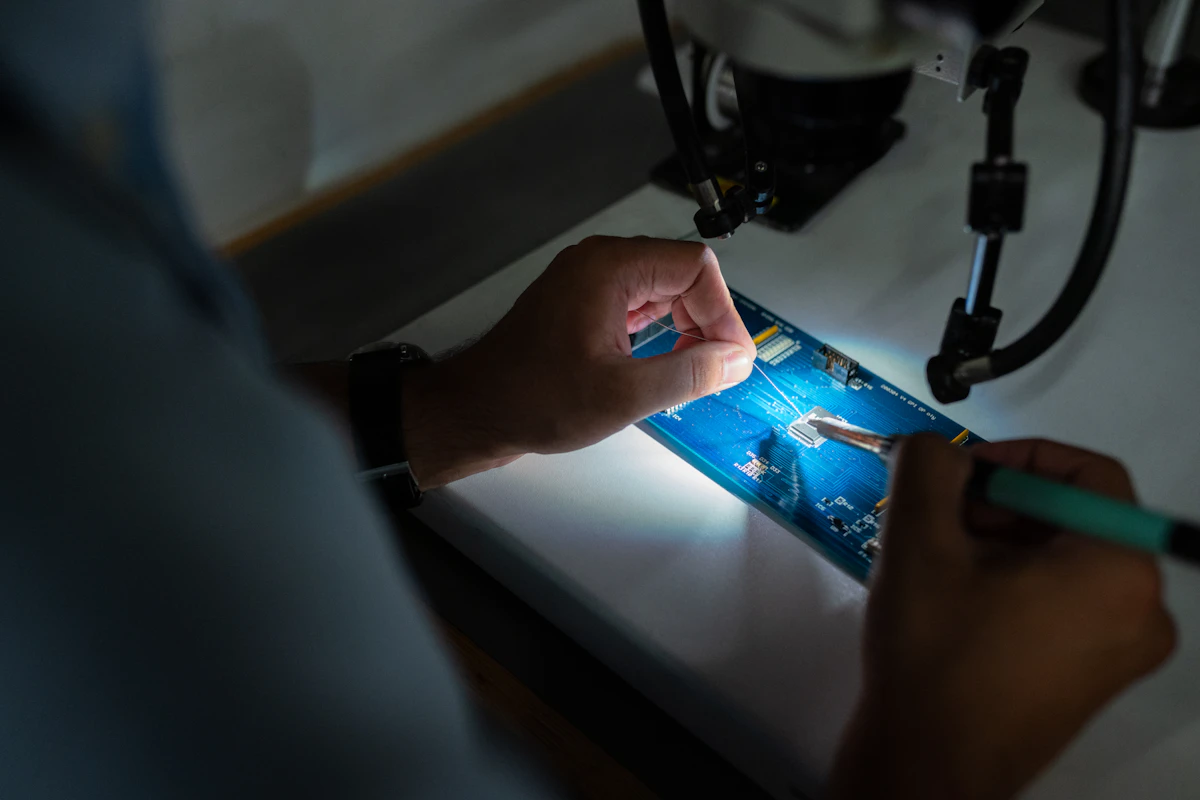
Figure 2: Quality installation standard deployment.
From an liability standpoint, repairing a CCA run and leaving it in service for security or active data systems is a major risk. The only professional, SSAIB-compliant option is to pull the compromised run out of the ducting or tray work and pull a fresh, solid copper Cat6 or Cat6a cable in its place.
Weatherproofing Joint Enclosures: Achieving IP66 and IP67
In many of my external Newcastle CCTV installations—whether mounting IP cameras on high-wind seaside structures or routing cables along wet exterior brickwork—weatherproofing is non-negotiable. Water ingress is the number one cause of physical layer failures in outdoor deployments.
If you must join or terminate an outdoor solid copper run (for example, transition from an external gel-filled PE-jacketed cable to an internal LSZH cable), you must use an IP-rated enclosure. Here is how to construct a weatherproof connection:
- Select the Right Rating: Use an IP66 enclosure if the junction will be subjected to high-pressure water jets, or an IP67 enclosure if there is any risk of temporary submersion.
- Cable Glands: Pass the cables through compression glands equipped with rubber seals that match the exact outer diameter of your cable jackets. Tighten the dome nuts until the rubber seal visibly deforms around the cable, creating a hermetic seal.
- Drip Loops: Always shape a physical “drip loop” in the cable run immediately prior to entering the junction box. This ensures gravity pulls running rainwater down and away from the gland entrance rather than channeling it directly into the seal.
- Self-Amalgamating Tape: For added protection on exposed RJ45 inline couplers, wrap the entire completed joint in high-grade self-amalgamating tape. This tape fuses to itself when stretched, creating a continuous waterproof jacket that locks out moisture.
Never run CCA externally. Because aluminium reacts aggressively with air and water, even the slightest trace of condensation inside a weatherproof enclosure will trigger galvanic corrosion. Within weeks, the copper cladding will flake off, the aluminium core will turn to white dust, and your network connection will drop offline.
Summary for the Field Engineer
Maintaining high standards in security and network infrastructure requires a zero-tolerance policy toward inferior components. When planning or auditing a network, keep these practical points in mind:
- Verify every drum: Conduct quick scratch and weight checks on any cable delivered to site to confirm it is 100% solid copper before pulling it through walls or conduits.
- Respect your PoE budgets: Never deliver PoE, PoE+, or PoE++ over CCA. The thermal accumulation in cable bundles poses a genuine fire risk and violates local building regulations.
- Enforce compliance: Ensure all critical infrastructure links—especially surveillance and alarm networks—are built on certified solid copper to comply with NSI, SSAIB, and EN 50131 standards.
- Terminate with care: Use quality IDC junctions and structured labeling systems to keep your network organised, highly serviceable, and easy to troubleshoot for years to come.
Q: What details do you provide regarding How to Repair and Maintain PoE Power Budgets?
A: We have written an extensive guide on this. Read our complete guide to How to Repair and Maintain PoE Power Budgets or contact Gary Pearce on 07830638337.
Q: What details do you provide regarding How to Repair and Maintain Keystone Jack Termination?
A: We have written an extensive guide on this. Read our complete guide to How to Repair and Maintain Keystone Jack Termination or contact Gary Pearce on 07830638337.
Q: What details do you provide regarding How to Repair and Maintain Plenum-Rated Cabling (Part 1)?
A: We have written an extensive guide on this. Read our complete guide to How to Repair and Maintain Plenum-Rated Cabling (Part 1) or contact Gary Pearce on 07830638337.
Q: What details do you provide regarding Improving Performance of your PoE Power Budgets?
A: We have written an extensive guide on this. Read our complete guide to Improving Performance of your PoE Power Budgets or contact Gary Pearce on 07830638337.