
How to Repair and Maintain Solid Copper vs CCA Cables

How to Repair and Maintain Solid Copper vs CCA Cables

rgba(0,0,0,0.1);” />

An Engineer’s Guide to Solid Copper vs CCA Cables: Repair, Maintenance, and Compliance

In my line of work as an NSI and SSAIB certified Security and Networking Engineer based in Newcastle upon Tyne, I have seen almost every physical layer failure imaginable. From poorly planned containment systems in historic Quayside buildings to suspect, unlabelled bundles stuffed into server racks in modern business parks, the physical layer is where a network succeeds or fails. Among all the issues I diagnose, one recurring hazard stands out: the misuse of Copper Clad Aluminium (CCA) cabling in structured networks, particularly when paired with high-draw Power over Ethernet (PoE) devices or critical security infrastructure.

For any professional installer or network administrator, understanding the structural, electrical, and mechanical differences between pure solid copper and CCA is not just academic—it is a matter of building safety, system reliability, and regulatory compliance. This comprehensive guide details how to identify, repair, maintain, and replace these two cabling mediums, keeping your installations in line with British Standards, NSI Grade 2 or 3 security guidelines, and SSAIB requirements.

Understanding the Technology: Solid Copper vs CCA

To appreciate why Solid Copper and Copper Clad Aluminium perform so differently, we must look at their metallurgy and how high-frequency signals and DC electricity travel through them.

Solid Copper Cabling

Solid copper conductors consist of 100% pure, oxygen-free copper. Pure copper is highly ductile, possesses excellent electrical conductivity (second only to silver), and boasts high tensile strength. In high-performance data cabling standards—ranging from Cat5e and Cat6 up to 10-Gigabit-capable Cat7 and Cat8 systems—solid copper is the benchmark. Because data signals travel near the surface of the conductor due to the “skin effect” at high frequencies (measured in hundreds of Megahertz), and DC power utilizes the entirety of the conductor’s cross-section, solid copper excels at carrying both high-bandwidth data and heavy electrical power simultaneously without excessive attenuation or thermal buildup.

Copper Clad Aluminium (CCA) Cabling

CCA cables are a compromise designed to reduce manufacturing costs. They feature an aluminium core covered with a thin outer sleeve of copper, typically accounting for only 10% to 15% of the conductor’s volume. While high-frequency AC data signals can flow relatively unimpeded along the outer copper skin, low-frequency and DC power signals are forced to travel through the aluminium core. Aluminium has 61% of the conductivity of copper, which means its DC resistance is roughly 55% to 60% higher than a solid copper conductor of the same gauge. This high resistance leads to significant voltage drops over distance and converts wasted electrical energy directly into heat.

Furthermore, aluminium is physically brittle. It suffers from high rate of flex fatigue, meaning it breaks easily when bent, and is highly susceptible to galvanic corrosion when exposed to moisture, as the two dissimilar metals (copper and aluminium) react chemically in a wet environment.

Security & Regulatory Compliance: NSI, SSAIB, and EN 50131

In the UK, installing CCA cable in security and life-safety applications is a major breach of professional standards. When executing a system design under NSI Grade 2 or Grade 3 guidelines, or preparing an installation for an SSAIB audit, the physical integrity of the transmission path is paramount. Under BS EN 50131 (the European standard for Intruder and Hold-up Alarm Systems) and BS 7671 (the IET Wiring Regulations), cabling must be fit for purpose and capable of sustaining operational voltages without excessive drop-offs.

If you are deploying IP CCTV systems, the stability of your infrastructure is critical for compliance with the code of practice set out by the UK Gov Surveillance Commission. This guidance stresses the need for resilient, high-availability video feeds that do not drop frames or experience power-induced dropouts. CCA cables, due to their high DC resistance and tendency to degrade at termination points, fail to meet these stringent reliability standards. Using them in a commercial or public-space security install puts your certification—and your clients’ insurance coverage—at direct risk.

PoE Power Budgets, Heating, and Fire Hazards

The rise of high-power PoE standards has turned the Solid Copper vs CCA debate into a serious fire safety conversation. Let us look at the power envelopes we regularly deploy:

  • PoE (802.3af): Delivers up to 15.4W at the source, operating over two pairs.
  • PoE+ (802.3at): Delivers up to 30.0W at the source, ideal for PTZ cameras and access control readers.
  • PoE++ (802.3bt Type 3 & 4): Delivers up to 60W or 90W respectively, utilizing all four pairs to power active display screens, heavy-duty heaters, and high-performance wireless access points.

When you pass these currents through a cable bundle, the physics of Joule heating ($I^2R$) apply. Because CCA has much higher electrical resistance ($R$), a bundle of CCA cables running PoE+ or PoE++ will experience significant thermal elevation. In enclosed spaces, such as ceiling voids, risers, or containment trunking, this heat build-up can melt the outer PVC sheathing, leading to conductor short-circuits, permanent insulation degradation, and in extreme cases, catastrophic electrical fires. For this reason, British Standards explicitly prohibit the use of non-compliant, non-copper conductors for PoE delivery within structured cabling networks.

Technical Specification Comparison Table

The table below highlights the crucial differences between solid copper and CCA cabling across key technical parameters:

Parameter / Specification Solid Pure Copper Copper Clad Aluminium (CCA)
DC Loop Resistance (per 100m) < 9.38 Ohms > 14.5 Ohms (Up to 60% higher)
Tensile Strength & Ductility High; tolerates pull tension up to 110N. Very low; prone to snapping under minimal tension.
PoE, PoE+, & PoE++ Support Fully certified up to 90W (Type 4) Extremely hazardous; high fire risk.
IDC Termination Performance Excellent gas-tight connection on Krone/110 blocks. Poor; blades slice the copper skin, causing corrosion.
Standards Compliance (TIA/EIA 568) Fully Compliant Non-Compliant
Susceptibility to Oxidation Low; stable over decades. High; rapid degradation when exposed to oxygen.

Testing, Identifying, and Troubleshooting

As a network engineer, you will often inherit systems built by others. You must be able to quickly determine if you are dealing with solid copper or a substandard CCA installation before committing to a maintenance SLA or certifying a network.

GARY PEARCE SECURITY SERVICES How to Repair and Maintain Solid Copper vs CCA Cables Core Category: Data Cabling

01 / INSTALLATION Standards Spec NSI & SSAIB Compliant Full certification log

02 / HARDWARE Technician Grade Solid Copper Shielding 4K Active Deterrence

03 / COVERAGE Support Area Newcastle & North East Call: 07830 638337

On-Site Identification Techniques

  • The Scratch Test: Take a utility knife and gently scrape away the top layer of the conductor’s metallic surface. If the deep orange-brown colour remains, it is pure copper. If a bright, silvery-white metal is exposed beneath, you have caught a CCA cable.
  • The Weight Test: Aluminium is significantly lighter than copper. A standard 305m (1000ft) box of pure copper Cat6 cable weighs approximately 11kg to 14kg. A 305m box of CCA Cat6 will feel noticeably light, weighing in at only 5.5kg to 7kg.
  • The Burn Test: Using a lighter, apply a direct flame to an exposed conductor. A solid copper wire will glow red, heat up, and retain its shape. A CCA wire will quickly degrade, melt, and snap as the aluminium core liquefies at a much lower temperature (660°C compared to copper’s 1085°C).

Field Testing with a Cable Analyser

While visual tests are helpful, the ultimate proof lies in active RF and electrical testing. A basic wiremap tester will not tell you if a cable is CCA; it will only verify pin-to-pin continuity. To expose CCA, you must use a certified level III/IV field tester, such as a Fluke DSX-8000 CableAnalyzer, to perform a full certification suite. Pay close attention to the DC Loop Resistance. If a 60-metre run returns resistance figures expected of a 100-metre run, the cable is almost certainly CCA. High resistance values cause high insertion loss and signal attenuation, which can lead to dropped packets and erratic performance on high-speed data links.

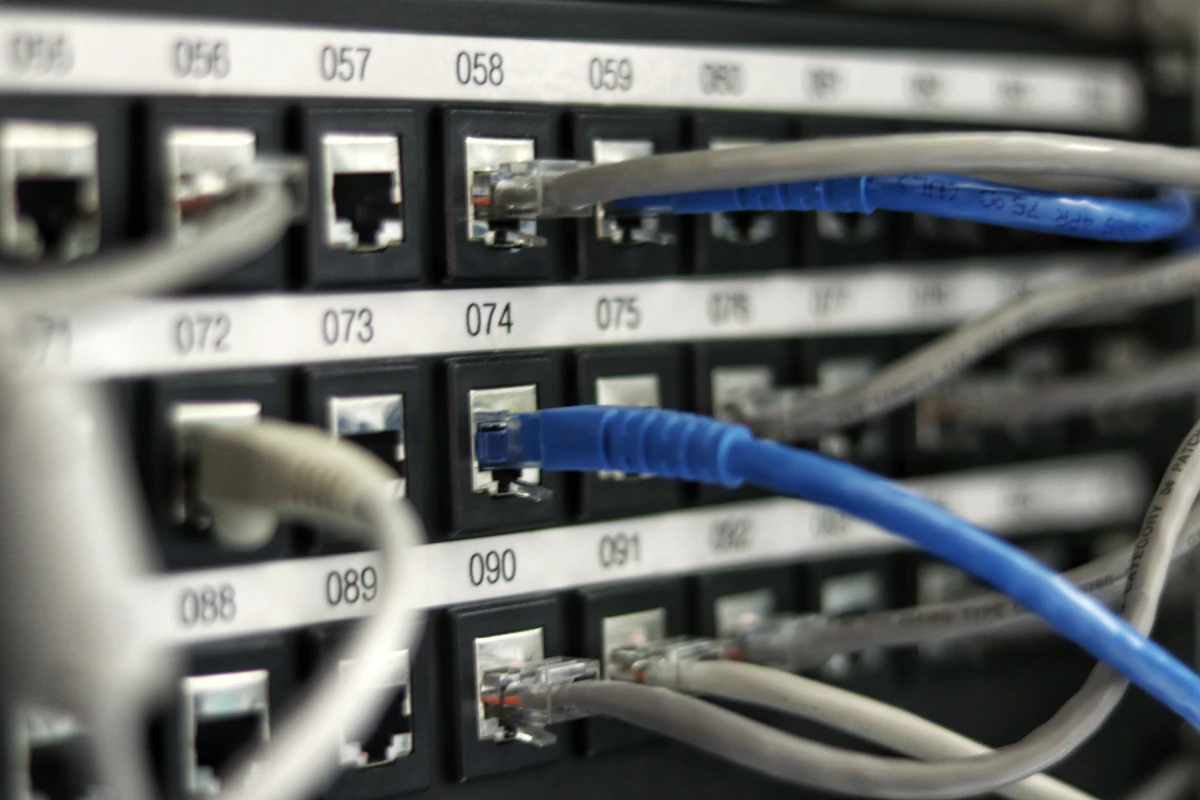
When documenting your tests and mapping out the network topology back to the comms room, keeping clear records is essential. Poor labeling can turn troubleshooting into a nightmare. Be sure to follow our internal guide on the Best Practices for Labeling Data Cabling Systems in Racks to ensure your panels, ports, and cable pathways are systematically mapped for future maintenance runs.

Repair and Maintenance Protocols

When physical damage occurs on a cable run—such as a drill puncturing a drywall cavity, rodent damage, or stress fractures inside conduit—how you resolve the issue depends entirely on the cable material. Below are the practical procedures for handling both scenarios.

Scenario A: Repairing Damaged Solid Copper Cables

Solid copper can be reliably repaired if there is sufficient slack and the damage is localized. However, you should never simply splice individual conductors together with electrical tape. To maintain Category compliance (Cat5e/Cat6) and preserve high-frequency performance, follow these steps:

  1. Isolate the Power: Ensure any PoE sources feeding the run are completely disabled at the switch level.
  2. Assess the Slack: Determine if there is enough physical slack in the run to cut out the damaged section and pull the cable ends back together. If not, you will need to insert a short patch section of identical spec (e.g., solid copper Cat6 to solid copper Cat6).
  3. Use an IDC Junction Box: Cut away the damaged section cleanly. Strip back the outer jacket by no more than 25mm to avoid changing the twist rate of the internal pairs. Use an inline, shielded IDC (Insulation Displacement Connector) junction box designed specifically for Cat6/Cat6A. Punch down the conductors using a high-quality punch-down tool set to low impact, maintaining the twists as close to the terminal as possible.
  4. Re-Test: Run a full autotest on your cable analyser to verify that NEXT (Near-End Crosstalk), return loss, and DC loop resistance are within acceptable limits.

Scenario B: The Reality of CCA Cable “Repairs”

If you encounter damaged CCA cable, do not attempt to repair it. It must be completely extracted and replaced with solid copper.

Why? When you attempt to punch down CCA onto an IDC Krone block, the sharp metal contact blades slice through the thin outer copper layer. Once the aluminium core is exposed to air, oxidation begins immediately. This oxide layer acts as an electrical insulator, rapidly increasing resistance until the connection fails entirely. Additionally, the physical action of pushing a punch-down tool onto brittle aluminium conductors often shears them right at the terminal, leading to a loop of endless frustration. If you try to crimp an RJ45 connector onto CCA, the displacement prongs will struggle to bite cleanly, resulting in poor physical contact that will fail under the slightest strain.

How to Repair and Maintain Solid Copper vs CCA Cables details

Figure 2: Quality installation standard deployment.

From an liability standpoint, repairing a CCA run and leaving it in service for security or active data systems is a major risk. The only professional, SSAIB-compliant option is to pull the compromised run out of the ducting or tray work and pull a fresh, solid copper Cat6 or Cat6a cable in its place.

Weatherproofing Joint Enclosures: Achieving IP66 and IP67

In many of my external Newcastle CCTV installations—whether mounting IP cameras on high-wind seaside structures or routing cables along wet exterior brickwork—weatherproofing is non-negotiable. Water ingress is the number one cause of physical layer failures in outdoor deployments.

If you must join or terminate an outdoor solid copper run (for example, transition from an external gel-filled PE-jacketed cable to an internal LSZH cable), you must use an IP-rated enclosure. Here is how to construct a weatherproof connection:

  • Select the Right Rating: Use an IP66 enclosure if the junction will be subjected to high-pressure water jets, or an IP67 enclosure if there is any risk of temporary submersion.
  • Cable Glands: Pass the cables through compression glands equipped with rubber seals that match the exact outer diameter of your cable jackets. Tighten the dome nuts until the rubber seal visibly deforms around the cable, creating a hermetic seal.
  • Drip Loops: Always shape a physical “drip loop” in the cable run immediately prior to entering the junction box. This ensures gravity pulls running rainwater down and away from the gland entrance rather than channeling it directly into the seal.
  • Self-Amalgamating Tape: For added protection on exposed RJ45 inline couplers, wrap the entire completed joint in high-grade self-amalgamating tape. This tape fuses to itself when stretched, creating a continuous waterproof jacket that locks out moisture.

Never run CCA externally. Because aluminium reacts aggressively with air and water, even the slightest trace of condensation inside a weatherproof enclosure will trigger galvanic corrosion. Within weeks, the copper cladding will flake off, the aluminium core will turn to white dust, and your network connection will drop offline.

Summary for the Field Engineer

Maintaining high standards in security and network infrastructure requires a zero-tolerance policy toward inferior components. When planning or auditing a network, keep these practical points in mind:

  • Verify every drum: Conduct quick scratch and weight checks on any cable delivered to site to confirm it is 100% solid copper before pulling it through walls or conduits.
  • Respect your PoE budgets: Never deliver PoE, PoE+, or PoE++ over CCA. The thermal accumulation in cable bundles poses a genuine fire risk and violates local building regulations.
  • Enforce compliance: Ensure all critical infrastructure links—especially surveillance and alarm networks—are built on certified solid copper to comply with NSI, SSAIB, and EN 50131 standards.
  • Terminate with care: Use quality IDC junctions and structured labeling systems to keep your network organised, highly serviceable, and easy to troubleshoot for years to come.

Q: What details do you provide regarding How to Repair and Maintain PoE Power Budgets?

A: We have written an extensive guide on this. Read our complete guide to How to Repair and Maintain PoE Power Budgets or contact Gary Pearce on 07830638337.

Q: What details do you provide regarding How to Repair and Maintain Keystone Jack Termination?

A: We have written an extensive guide on this. Read our complete guide to How to Repair and Maintain Keystone Jack Termination or contact Gary Pearce on 07830638337.

Q: What details do you provide regarding How to Repair and Maintain Plenum-Rated Cabling (Part 1)?

A: We have written an extensive guide on this. Read our complete guide to How to Repair and Maintain Plenum-Rated Cabling (Part 1) or contact Gary Pearce on 07830638337.

Q: What details do you provide regarding Improving Performance of your PoE Power Budgets?

A: We have written an extensive guide on this. Read our complete guide to Improving Performance of your PoE Power Budgets or contact Gary Pearce on 07830638337.
?
Frequently Asked Questions

Q: What details do you provide regarding How to Repair and Maintain RJ45 Shielded Connectors?

A: We have written an extensive guide on this. Read our complete guide to How to Repair and Maintain RJ45 Shielded Connectors or contact Gary Pearce on 07830638337.

Need a Professional Quote?

Trust Gary Pearce Home Services for NSI and SSAIB certified installations. Expert, reliable, and compliant.

Improving Performance of your Patch Panel Organization

Improving Performance of your Patch Panel Organization

rgba(0,0,0,0.1);” />

The Critical Role of Patch Panel Organisation in High-Performance Networks

As a seasoned NSI/SSAIB certified Security and Networking Engineer based in Newcastle upon Tyne, I’ve witnessed first-hand the profound impact that meticulous data cabling and patch panel organisation has on a network’s performance, reliability, and security. In today’s interconnected world, where everything from IP CCTV cameras and access control systems to VoIP telephony and high-speed data transfer relies on a robust physical infrastructure, a well-managed patch panel is not merely a convenience – it is a strategic asset.

Poor patch panel organisation leads to a myriad of issues: network downtime, frustrating troubleshooting, increased maintenance costs, and compromised security postures. This comprehensive guide, drawing upon decades of practical experience and adherence to stringent industry standards such as those mandated by NSI and the SSAIB Inspectorate Board, will detail how to elevate your patch panel setup from a tangled mess to a high-performing, compliant, and future-proof hub. We’ll delve into cabling standards, power considerations, installation best practices, and essential troubleshooting techniques, all designed to ensure your data cabling infrastructure supports your operational demands.

Understanding Cabling Standards and Their Impact on Performance

The foundation of any high-performing network begins with the correct selection and implementation of cabling. The patch panel acts as the central termination point for these cables, making its compatibility and capability paramount.

Cat5e: The Workhorse for Legacy Systems and Basic Needs

Category 5e (Cat5e) cabling was once the industry standard, capable of supporting Gigabit Ethernet (1000BASE-T) over distances up to 100 metres. While still prevalent in older installations or for less demanding applications, it operates at a frequency of up to 100 MHz. For many modern security systems, such as NSI Grade 2 intruder alarms or basic IP cameras, Cat5e can suffice, provided the cable runs are within specification and the installation quality is high. However, its lower bandwidth and susceptibility to crosstalk make it less suitable for bandwidth-intensive applications or future-proofing.

Cat6/6a: The Modern Standard for Gigabit and Beyond

Category 6 (Cat6) cabling significantly improves upon Cat5e, offering enhanced performance up to 250 MHz and tighter specifications for near-end crosstalk (NEXT) and return loss. It also supports Gigabit Ethernet over 100 metres and can facilitate 10 Gigabit Ethernet (10GBASE-T) over limited distances (typically up to 55 metres). For most contemporary deployments, including NSI Grade 3 security systems requiring higher data throughput for advanced analytics or higher-resolution IP cameras, Cat6 is an excellent choice.

Category 6 Augmented (Cat6a) pushes this further, supporting 10 Gigabit Ethernet over the full 100-metre distance at frequencies up to 500 MHz. This makes it ideal for data centre backbones, enterprise networks, and demanding security infrastructures where consistent 10Gbps performance is required across an estate. Cat6a cables are typically thicker due to improved shielding or internal separators designed to reduce alien crosstalk (AXT), which is critical for reliable 10GBASE-T operation.

Cat7/7a and Cat8: Pushing the Boundaries for Future Demands

For environments with extreme bandwidth requirements, Category 7 (Cat7) and Category 7 Augmented (Cat7a) cabling offer performance up to 600 MHz and 1000 MHz respectively, providing support for 10 Gigabit Ethernet and beyond. These cables feature individual shielding for each twisted pair (S/FTP) and overall shielding, drastically reducing crosstalk and external interference. However, their use often requires GG45 or TERA connectors, which are not backward compatible with the RJ45 standard, making them less common in typical office or security installations.

Category 8 (Cat8) represents the pinnacle of copper cabling technology, designed to support 25 Gigabit Ethernet (25GBASE-T) and 40 Gigabit Ethernet (40GBASE-T) over shorter distances (up to 30 metres). Operating at frequencies up to 2000 MHz, Cat8 is primarily intended for data centre and server room environments, connecting high-speed switches to servers. Patch panels for Cat8 must also meet these rigorous specifications to maintain the overall channel performance. While potentially overkill for most security applications today, understanding its capabilities is crucial for future-proofing extremely demanding backbones, especially when considering the Benefits of Using Fiber Optic Backbones for Large Estate Security for larger estates where copper limitations become apparent.

Optimising for Power over Ethernet (PoE) & Thermal Management

The proliferation of Power over Ethernet (PoE) devices – IP cameras, wireless access points (WAPs), VoIP phones, and IoT sensors – has revolutionised network deployments. However, it introduces new considerations for patch panel organisation and cable selection.

PoE, PoE+, and PoE++ (802.3af/at/bt)

PoE standards define varying levels of power delivery:

  • PoE (802.3af): Delivers up to 15.4W per port (12.95W available to the device). Suitable for basic IP phones or low-power cameras.
  • PoE+ (802.3at): Delivers up to 30W per port (25.5W available). Ideal for pan-tilt-zoom (PTZ) cameras, advanced WAPs, or video conferencing systems.
  • PoE++ (802.3bt Type 3 and Type 4): Type 3 delivers up to 60W per port (51W available), and Type 4 delivers up to 100W per port (71W available). These higher power levels support devices like thin clients, LED lighting, and high-performance security cameras with integrated heaters or analytics engines.

When current flows through cable bundles, it generates heat. Higher power PoE standards (especially PoE++) and denser cable bundles significantly increase this thermal load. Excessive heat can degrade cable performance, increase insertion loss, and potentially shorten the lifespan of the cabling and connected active equipment. This is particularly relevant for installations adhering to NSI or SSAIB guidelines, where system reliability and longevity are paramount.

Selecting PoE-Compliant Patch Panels and Cabling

To mitigate heat-related issues and ensure reliable power delivery, several factors must be considered:

  • Conductor Gauge: Opt for cables with larger conductor gauges (e.g., 23 AWG for Cat6a over 24 AWG for Cat5e/6) as they have lower resistance and generate less heat. Solid copper conductors are essential; avoid copper-clad aluminium (CCA) for PoE applications due to higher resistance and greater risk of failure.
  • Cable Type: U/UTP (unshielded twisted pair) cables are common, but F/UTP (foiled/unshielded twisted pair) or S/FTP (shielded/foiled twisted pair) cables can offer better heat dissipation, especially when housed in well-ventilated trays or conduits.
  • Patch Panel Design: Choose patch panels designed to handle higher PoE loads. These often feature improved internal construction and wider spacing between ports to aid airflow. Some panels include integral cable management bars to ensure proper bend radius and reduce strain, both of which are critical for maintaining cable integrity under thermal stress.
  • Ventilation: Ensure adequate ventilation within the cabinet or rack housing the patch panels and network switches. Consider active cooling solutions (fans) if temperatures are expected to rise significantly, especially in densely populated racks or those located in warmer environments. This is crucial for maintaining the operational temperature ranges specified by equipment manufacturers, directly impacting system reliability and compliance with security standards.

Best Practices for Patch Panel Installation and Labelling

This section outlines the detailed procedures and techniques for installing and managing patch panels to achieve optimal performance and ease of maintenance.

Rack and Cabinet Selection

The choice of rack or cabinet is fundamental. It must provide sufficient space for current and future equipment, allow for proper cable routing and bend radius, and ensure adequate airflow. For security installations, especially those involving NSI Grade 2/3 systems, lockable cabinets are a must to prevent unauthorised access and tampering. If cabling extends to external environments or industrial zones, consider outdoor-rated enclosures with appropriate IP ratings (e.g., IP66 for protection against powerful water jets and dust ingress, or IP67 for temporary immersion in water) to house connectivity points before they transition to an internal patch panel.

GARY PEARCE SECURITY SERVICES Improving Performance of your Patch Panel Organization Core Category: Data Cabling

01 / INSTALLATION Standards Spec NSI & SSAIB Compliant Full certification log

02 / HARDWARE Technician Grade Solid Copper Shielding 4K Active Deterrence

03 / COVERAGE Support Area Newcastle & North East Call: 07830 638337

Cable Management – The Cornerstone of Organisation

Effective cable management is not just about aesthetics; it is paramount for performance and troubleshooting.

  • Horizontal and Vertical Managers: Utilise horizontal and vertical cable managers within the rack. Horizontal managers guide cables between equipment (e.g., from a switch to a patch panel), while vertical managers route bundles up and down the rack. These prevent tangles, maintain bend radius, and support cable weight.
  • Bend Radius: Adhere strictly to the manufacturer’s specified minimum bend radius for all cables. Kinking or overly tight bends can degrade signal integrity, especially for higher category cables and those carrying PoE. For example, a typical Cat6 cable might have a minimum bend radius of four times its diameter.
  • Strain Relief: Ensure cables are properly secured to avoid strain on terminations. Cable ties (preferably Velcro straps, not harsh zip ties that can compress cable jackets) should be used judiciously, not overtightened, and positioned to support the cable without crimping.
  • Pathways: Plan clear, unobstructed pathways for all cable runs from the cable entry point to the patch panel. This minimises congestion and simplifies future additions or changes.

Termination Techniques for Peak Performance

The quality of termination directly impacts network performance. Poor terminations are a common source of signal degradation and network issues.

  • Punch-Down: For IDC (Insulation Displacement Connector) type patch panels, use the correct punch-down tool with the appropriate blade (110 or Krone). Ensure wires are fully seated, and excess wire is cleanly trimmed.
  • Keystone Modules: If using modular patch panels with keystone jacks, ensure the module’s colour code (T568A or T568B) matches the building’s wiring standard. Consistency is key. In the UK, T568B is more commonly used, but always verify before termination.
  • Minimising Untwisted Pairs: The twists in Ethernet cables are crucial for cancelling out electromagnetic interference (EMI) and crosstalk. When terminating, minimise the amount of untwisted wire as much as possible, typically to no more than 13mm (0.5 inches).
  • Cable Sheath Management: Ensure the cable sheath is securely terminated within the connector, providing strain relief and maintaining the cable’s integral shielding (if applicable).
  • Testing and Verification: Every terminated cable segment (from wall outlet to patch panel port) MUST be tested with a cable certifier. A Fluke Networks DSX-8000 or similar device will verify the link meets the specified Category standard (e.g., Cat6a) across parameters like NEXT, FEXT, Return Loss, Insertion Loss, and length. Certification is a non-negotiable step for professional installations, especially for NSI/SSAIB compliance, providing documented proof of performance.

Comprehensive Labelling – Your Future Self Will Thank You

An organised patch panel without clear labelling is like a library without a catalogue. Effective labelling is critical for efficient management, troubleshooting, and maintenance.

  • Consistent Methodology: Develop a consistent labelling scheme and stick to it. This should ideally integrate with your broader building or site numbering plan. For instance, ‘Building A-Floor 2-Room 10-Wall Port 01’ could be labelled ‘A2R10-01’ at the patch panel.
  • Port-Level Labels: Each port on the patch panel should clearly indicate its corresponding wall outlet or device.
  • Cable-Level Labels: Both ends of the horizontal cables connecting to the patch panel should be labelled. Similarly, patch leads connecting equipment to the patch panel should be labelled at both ends.
  • Colour Coding: Consider using colour-coded patch leads to visually categorise connections (e.g., blue for data, yellow for PoE security cameras, grey for VoIP phones).
  • Documentation: Maintain detailed documentation (digital and physical) that maps each patch panel port to its connected device or location. This is invaluable for troubleshooting and essential for NSI/SSAIB audit trails.

Ensuring Security Compliance and Future-Proofing

Beyond raw performance, a well-organised patch panel infrastructure contributes significantly to security compliance and future adaptability.

Adhering to NSI and SSAIB Standards

For any organisation operating security systems in the UK, adherence to standards set by bodies like the National Security Inspectorate (NSI) and the SSAIB Inspectorate Board is not optional; it’s a legal and operational imperative. These standards, such as EN 50131 for intruder alarm systems (defining grades like Grade 2 for low-to-medium risk and Grade 3 for medium-to-high risk installations), EN 50132 for CCTV, and EN 50133 for access control, dictate not only the performance of the security equipment but also the quality and integrity of the underlying cabling infrastructure. Proper cabling, termination, and robust physical security around patch panels (e.g., within locked cabinets) directly contribute to maintaining these compliance levels. Faulty cabling can undermine the performance of even the most sophisticated security sensors or cameras, leading to false alarms, missed events, and ultimately, a compromised security posture. Certified installers, like myself, ensure that all installations meet these rigorous requirements, providing clients with peace of mind and auditable compliance.

Planning for Scalability and Fibre Optic Integration

A well-designed patch panel system allows for easy expansion and upgrades. Consider modular patch panels that accept individual keystone jacks, offering flexibility to mix and match different cable categories (e.g., Cat6a and fibre optic) as needs evolve. Always leave some spare capacity – a good rule of thumb is 10-20% spare ports – to accommodate future growth without immediate re-cabling.

For large estates, campus environments, or applications requiring extremely high bandwidth and long distances, fibre optic cabling becomes indispensable. While this guide focuses on copper patch panels, understanding the seamless integration of fibre is crucial. Fibre optic patch panels (FOPPs) can sit alongside copper panels, serving as termination points for fibre backbones that link buildings or floors. When considering the benefits of fibre, particularly for high-bandwidth security applications spread across expansive properties, I highly recommend consulting Our internal guide: Benefits of Using Fiber Optic Backbones for Large Estate Security. This article details how fibre optic backbones enhance resilience, provide immunity to electromagnetic interference, and support future bandwidth demands, forming a critical component of a truly future-proof network architecture.

Improving Performance of your Patch Panel Organization details

Figure 2: Quality installation standard deployment.

Troubleshooting Common Patch Panel Issues

Even with meticulous installation, issues can arise. A well-organised and documented patch panel makes troubleshooting significantly easier and faster.

Diagnosing Connectivity Problems

The most common issues stem from poor connections or faulty cables:

  • Loose Terminations: A wire that hasn’t been fully seated in the punch-down block or keystone jack is a frequent culprit. Visually inspect all terminations on the patch panel and wall outlet.
  • Faulty Patch Leads: Patch leads connecting equipment to the patch panel are often overlooked. These are subject to frequent bending and stress. Swap out suspect patch leads with known good ones.
  • Incorrect Wiring (T568A/B Mismatch): If one end of the horizontal cable is terminated T568A and the other T568B, the link will not function correctly. Ensure consistency.
  • Cable Damage: Kinked, crushed, or cut cables can cause intermittent or complete loss of connectivity. Visible damage, often hidden behind walls or in conduit, requires careful inspection.

Utilising Cable Testers and Certifiers

Diagnostic tools are indispensable for pinpointing issues:

  • Basic Continuity Testers: These inexpensive tools can verify basic wire map (correct pairing and continuity) and detect open or short circuits. They are good for quick checks but provide no performance metrics.
  • Advanced Certifiers: For professional troubleshooting and compliance, a full cable certifier (e.g., Fluke Networks DSX series) is essential. These devices perform a comprehensive suite of tests, including:
    • Wire Map: Checks for correct pairing, opens, shorts, and split pairs.
    • Length: Measures the physical length of the cable.
    • Near-End Crosstalk (NEXT) & Far-End Crosstalk (FEXT): Measures signal coupling between wire pairs, indicating interference.
    • Return Loss: Measures signal reflections, indicating impedance mismatches or poor terminations.
    • Insertion Loss (Attenuation): Measures signal loss over the cable’s length.
    • Power over Ethernet (PoE) Testing: Verifies voltage, current, and power delivery capabilities, crucial for PoE deployments.

    Interpreting these results allows for precise identification of the fault’s nature and location, saving significant time and effort.

Addressing Performance Degradation

Beyond complete failure, subtle performance issues can plague networks:

  • Crosstalk & EMI: While Cat6a and higher are designed to mitigate these, improper termination (too much untwisted wire), tight bundling of unshielded cables, or proximity to power cables can introduce interference, reducing effective bandwidth. Ensure segregation of data and power cables wherever possible.
  • Impedance Mismatch: Using cables or connectors of different categories within a single link can create impedance mismatches, leading to signal reflections and increased return loss.
  • Overheating in PoE Deployments: As discussed, dense bundling of PoE cables can lead to increased temperatures, degrading performance. Check cabinet temperatures and ensure adequate ventilation. If necessary, redistribute PoE devices across more cables or consider upgrading to higher gauge cabling.

Ethernet Cabling Standards Comparison

This table provides a concise comparison of the key specifications for common Ethernet cabling standards, aiding in informed decision-making for your network infrastructure.

Feature Cat5e Cat6 Cat6a Cat7 Cat8
Max Bandwidth 1 Gbps 1 Gbps (up to 10 Gbps @ 55m) 10 Gbps 10 Gbps 25/40 Gbps
Max Frequency 100 MHz 250 MHz 500 MHz 600 MHz (Cat7a: 1000 MHz) 2000 MHz
Max Distance (10 Gbps) N/A (1 Gbps @ 100m) 55 metres 100 metres 100 metres N/A (25/40 Gbps @ 30m)
Shielding U/UTP (Unshielded) U/UTP (Unshielded) or F/UTP F/UTP, S/FTP (Shielded) S/FTP (Shielded pairs & overall) F/UTP or S/FTP (Shielded)
Connector Type RJ45 RJ45 RJ45 GG45 / TERA (sometimes RJ45 compatible) RJ45

Conclusion: A Well-Organised Patch Panel is a Strategic Asset

Investing time and effort into properly organising your patch panel infrastructure is not merely an administrative task; it is a critical investment in your network’s present and future performance, reliability, and security. From selecting the appropriate cabling standards to meticulously planning cable management, termination, and comprehensive labelling, every step contributes to an efficient and resilient network. Adhering to professional standards and certifications, such as those governed by NSI and SSAIB, further ensures your infrastructure meets stringent security and operational criteria.

A well-maintained and clearly documented patch panel minimises downtime, simplifies troubleshooting, reduces operational costs, and provides the scalability needed to adapt to evolving technological demands. By following the detailed guidelines outlined in this guide, you can transform your data cabling setup into a robust, high-performing backbone that confidently supports your organisation’s critical systems, today and for years to come.

Q: What details do you provide regarding Improving Performance of your Gigabit Speeds?

A: We have written an extensive guide on this. Read our complete guide to Improving Performance of your Gigabit Speeds or contact Gary Pearce on 07830638337.

Q: What details do you provide regarding Improving Performance of your Server Rack Grounding?

A: We have written an extensive guide on this. Read our complete guide to Improving Performance of your Server Rack Grounding or contact Gary Pearce on 07830638337.

Q: What details do you provide regarding Improving Performance of your Fiber Optic Fusion Splicing (Part 1)?

A: We have written an extensive guide on this. Read our complete guide to Improving Performance of your Fiber Optic Fusion Splicing (Part 1) or contact Gary Pearce on 07830638337.

Q: What details do you provide regarding Improving Performance of your PoE Power Budgets?

A: We have written an extensive guide on this. Read our complete guide to Improving Performance of your PoE Power Budgets or contact Gary Pearce on 07830638337.

?
Frequently Asked Questions

Q: What details do you provide regarding Improving Performance of your Low Smoke Zero Halogen (LSZH)?

A: We have written an extensive guide on this. Read our complete guide to Improving Performance of your Low Smoke Zero Halogen (LSZH) or contact Gary Pearce on 07830638337.

Need a Professional Quote?

Trust Gary Pearce Home Services for NSI and SSAIB certified installations. Expert, reliable, and compliant.

Expert Guide to Underfloor Cable Trays Installations

Expert Guide to Underfloor Cable Trays Installations

rgba(0,0,0,0.1);” />

Expert Guide to Underfloor Cable Trays Installations: Precision, Performance, and Compliance

Greetings from Newcastle upon Tyne. As Gary Pearce, an NSI and SSAIB certified Security and Networking Engineer, I’ve dedicated my career to crafting robust and reliable infrastructure solutions across the UK. Today, I want to share insights from years of hands-on experience concerning a critical, yet often overlooked, element of modern building infrastructure: the expert installation of underfloor cable trays. In an era where data is king and seamless connectivity is paramount, the unseen network backbone beneath our feet plays a pivotal role in operational efficiency, system longevity, and, crucially, security.

The decision to deploy an underfloor cabling system using dedicated trays is a strategic one, offering myriad benefits from enhanced aesthetics and improved airflow for cooling to simplified maintenance and superior physical security. However, the success of such an installation hinges entirely on meticulous planning, adherence to stringent industry standards, and a deep understanding of both networking and building regulations. This comprehensive guide aims to arm you with the knowledge required to design, install, and maintain an underfloor cabling infrastructure that not only meets today’s demands but is also resilient and future-proof.

Understanding the Foundation: Why Underfloor Cabling?

Before delving into the technicalities, it’s essential to appreciate the strategic advantages that underfloor cable tray systems offer. Raised access flooring systems, common in data centres, modern offices, and educational institutions, create a void beneath the main floor surface, providing an ideal, discreet pathway for services. Utilising this void for cabling brings several key benefits:

  • Aesthetics and Space Optimisation: By concealing cables, we eliminate unsightly overhead trunking and wall-mounted conduits, contributing to a cleaner, more professional environment. This also frees up valuable wall and ceiling space.
  • Enhanced Accessibility and Maintenance: With removable floor panels, technicians can easily access specific sections of cabling for maintenance, upgrades, or troubleshooting without significant disruption to operations.
  • Improved Thermal Management: In data centres and comms rooms, the underfloor void is often part of the cooling plenum, allowing hot air to dissipate or cold air to be delivered directly to equipment. Proper cable management in trays prevents the formation of “hot spots” within cable bundles, a critical consideration for Power over Ethernet (PoE) deployments.
  • Physical Security: Cables are protected from accidental damage, tampering, and unauthorised access, which is especially important for critical infrastructure and security system wiring (NSI Grade 2/3 and SSAIB compliance).
  • Flexibility and Scalability: Underfloor systems inherently offer greater flexibility for future expansion and reconfiguration of network layouts compared to fixed overhead or in-wall installations.

Core Components: Cable Trays and Their Selection

The choice of cable tray is fundamental to the system’s success. Various types and materials are available, each suited to different applications and environmental conditions:

  • Basket Trays (Mesh): Highly versatile and cost-effective, offering excellent ventilation for heat dissipation. Easy to cut and form on-site, making them ideal for complex routes and last-minute adjustments.
  • Ladder Trays: Robust and excellent for heavy cable loads, providing maximum ventilation due to their open design. Often used for main distribution runs.
  • Perforated Trays: A solid base with holes for ventilation, offering good support for cables while providing some protection from dust and dropped items.
  • Solid Bottom Trays: Offer maximum protection for cables against dust, moisture, and EMI/RFI, but provide minimal ventilation. More suited for environments requiring high ingress protection or when segregating sensitive cables.

Materials:

  • Pre-Galvanised Steel: Standard and economical for indoor, dry environments.
  • Hot-Dip Galvanised Steel: Offers enhanced corrosion resistance, suitable for damp or challenging indoor environments, potentially achieving aspects of IP (Ingress Protection) for the tray itself, though the overall system’s IP rating depends on enclosures and sealing.
  • Stainless Steel: Best for highly corrosive environments or applications demanding superior cleanliness, such as pharmaceutical or food processing facilities.
  • PVC/GRP: Lightweight, non-conductive, and highly resistant to corrosion. Ideal where metallic trays are unsuitable due to chemical exposure or electromagnetic sensitivity.

Cabling Standards & Performance: A Deep Dive into Network Infrastructure

The cables themselves are the arteries of your network, and their selection, installation, and management directly dictate performance, reliability, and future scalability. My work often involves deploying high-performance networks, utilising equipment from industry leaders like Ubiquiti UniFi Networks, which demand robust cabling infrastructure.

Ethernet Cabling Standards and Applications:

Understanding the nuances of each cabling category is crucial for optimising performance and cost-effectiveness:

  • Category 5e (Cat5e): Still prevalent for basic network requirements, supporting 1 Gigabit Ethernet (1GbE) up to 100 metres. Suitable for general data, VoIP, and non-PoE CCTV applications where budget is a primary concern. Its performance may be marginal for high-density PoE applications due to potential heat build-up.
  • Category 6 (Cat6): A significant step up, providing 1GbE over 100m and 10 Gigabit Ethernet (10GbE) up to 55 metres. Cat6 offers improved crosstalk performance and is excellent for modern office environments, supporting standard PoE and PoE+ devices. When bundled in trays, careful consideration for heat dissipation is required.
  • Category 6a (Cat6a): The preferred choice for new installations requiring 10GbE over the full 100-metre distance. Cat6a is designed with superior performance specifications, making it suitable for high-bandwidth applications, virtualisation, and all current PoE standards (including PoE++). Its larger diameter and more robust construction also assist in heat management within cable bundles.
  • Category 7/7a (Cat7/7a): Primarily designed for 10GbE with potential for higher speeds (up to 100GbE in future standards) over 100m, but typically uses GG45 or TERA connectors rather than RJ45. Individually shielded pairs (S/FTP) provide exceptional noise immunity, making them ideal for environments with high EMI/RFI. However, their rigidity and specific connector requirements can increase installation complexity and cost.
  • Category 8 (Cat8): The latest standard, supporting 25GbE and 40GbE up to 30 metres over copper cabling. Cat8 is specifically engineered for data centre environments and short-distance interconnects, offering extremely high bandwidth. It typically features heavily shielded cables (S/FTP or F/FTP) and requires specific connectors, making it overkill for most general office underfloor deployments.

Power over Ethernet (PoE) Budgets and Thermal Considerations:

PoE technology simplifies infrastructure by delivering both data and power over a single Ethernet cable. This is a game-changer for devices like IP cameras, wireless access points, VoIP phones, and access control systems, often central to security installations that I manage. However, it introduces significant thermal management challenges, especially in underfloor trays:

  • PoE (IEEE 802.3af): Provides up to 15.4W at the Power Sourcing Equipment (PSE) and 12.95W at the Powered Device (PD). Suitable for basic IP phones and simpler access points.
  • PoE+ (IEEE 802.3at): Delivers up to 30W at the PSE and 25.5W at the PD. Ideal for more powerful IP cameras (including PTZ), high-performance wireless access points, and thin clients.
  • PoE++ (IEEE 802.3bt Type 3 & Type 4):
    • Type 3 (60W PoE): Up to 60W at the PSE and 51W at the PD, enabling connection of LED lighting, video conferencing systems, and displays.
    • Type 4 (90W PoE): Up to 90W at the PSE and 71W at the PD, supporting laptops, larger displays, and even powering smaller desktop computers.

Heat Dissipation: When power is transmitted over copper cables, some energy is lost as heat due to conductor resistance. In dense bundles within enclosed underfloor trays, this heat can accumulate significantly. Elevated cable temperatures can lead to:

  • Performance Degradation: Increased insertion loss, affecting signal integrity and reducing effective cable length.
  • Cable Damage: Over time, insulation can degrade, leading to shorts or complete failure.
  • Safety Hazards: Though rare with proper installation, extreme heat can pose fire risks.

To mitigate this, it’s vital to follow derating guidelines from standards like TIA/EIA 568. These guidelines specify reduced maximum cable lengths or smaller bundle sizes for PoE applications, especially for higher power levels and in environments with limited airflow. Basket trays are often preferred underfloor due to their excellent ventilation properties.

Design and Planning: A Strategic Approach to Installation

The success of an underfloor cable tray installation is predominantly determined during the design and planning phase. As an NSI/SSAIB certified engineer, I adhere to a rigorous planning methodology:

1. Site Survey and Assessment:

  • Floor Void Depth: Crucial for determining tray type, support structure, and capacity. Adequate depth allows for proper bend radius of cables and segregation of services.
  • Existing Services: Identify and map out any existing electrical, HVAC, plumbing, or fire suppression systems within the void to avoid clashes and ensure adequate separation.
  • Entry and Exit Points: Plan precise locations for cables to enter/exit the floor void to equipment racks, wall outlets, or other distribution points. Utilise grommets and brush strips for floor panel penetrations to maintain airflow integrity and minimise dust ingress.
  • Load Requirements: Calculate the anticipated weight of cables and trays to ensure the raised floor support system can safely accommodate the load.

2. Layout Design and Segregation:

  • Separation of Services: A cornerstone of best practice is strict segregation of data, power, and security cabling. This minimises Electromagnetic Interference (EMI) from power cables affecting sensitive data signals. Standards recommend a minimum separation (e.g., 300mm for unshielded data from unshielded power, reducing for shielded/conduited runs). Use dedicated trays or compartmentalised trays where space is limited.
  • Bend Radius: All data cables, especially fibre optic and high-category copper (Cat6a, Cat7, Cat8), have minimum bend radius specifications. Violating these can damage cable integrity, leading to performance degradation or outright failure. Cable trays must facilitate these gentle curves.
  • Accessibility and Maintenance Zones: Design the layout to allow easy access to all cable runs and connections. Avoid overcrowding, which makes troubleshooting and future expansion difficult.

3. Earthing, Bonding, and Fire Stopping:

  • Earthing and Bonding: All metallic cable trays and support systems must be properly earthed (grounded) and bonded in accordance with BS 7671 (IET Wiring Regulations). This is critical for safety, to prevent electric shock, and for mitigating EMI/RFI, particularly when using shielded cables (F/UTP, S/FTP).
  • Fire Stopping: Any penetrations through fire-rated walls or floors for cable trays must be appropriately fire-stopped using approved materials (e.g., fire-rated mastic, pillows, or collars) to maintain the building’s fire compartmentation. This is a non-negotiable building regulation requirement.

4. Environmental Considerations:

While IP66/IP67 weatherproofing ratings are typically for outdoor installations, the principle of ingress protection applies. Underfloor voids are not impervious to environmental factors:

GARY PEARCE SECURITY SERVICES Expert Guide to Underfloor Cable Trays Installations Core Category: Data Cabling

01 / INSTALLATION Standards Spec NSI & SSAIB Compliant Full certification log

02 / HARDWARE Technician Grade Solid Copper Shielding 4K Active Deterrence

03 / COVERAGE Support Area Newcastle & North East Call: 07830 638337

  • Dust and Debris: Choose perforated or solid bottom trays in areas prone to dust or where maintenance activities might drop debris.
  • Moisture: In areas with potential for leaks (e.g., near plant rooms, restrooms, or external walls), consider more enclosed trays or conduit for critical runs. Hot-dip galvanised or stainless steel trays offer better corrosion resistance.
  • Vermin Protection: In some environments, measures may be needed to prevent rodents from accessing the void and damaging cables.

5. Security Compliance & Dedicated Cabling:

For security systems (CCTV, Access Control, Intruder Alarms), cabling pathways are often critical infrastructure. As an NSI/SSAIB certified engineer, I ensure compliance with standards like EN 50131 for intruder alarm systems, which dictates requirements for cable protection against tampering and damage. Security cabling should be run in dedicated, secure pathways where possible, separate from general data and power. Consideration for aesthetic cabling is also important, as discussed in Balancing Aesthetics and Security: Minimalist Camera Mounting.

Installation Best Practices: Executing with Precision

With a robust design in hand, the installation phase demands meticulous attention to detail to bring the blueprint to life.

1. Tray Installation:

  • Support Systems: Utilise appropriate support methods such as threaded rods, cantilever brackets, or trapeze supports, securely fixed to the building structure or raised floor pedestals where permitted. Spacing of supports must comply with manufacturer specifications and relevant standards to prevent sagging.
  • Height and Alignment: Install trays at a consistent height and perfectly aligned to ensure uniform cable support and ease of access. Maintain sufficient clearance from existing services and for future expansion.
  • Cutting and Bending: When modifying trays on-site, use appropriate tools to ensure clean cuts and smooth edges. Deburr all cut surfaces to prevent cable damage. Avoid sharp bends that could stress the tray or compromise cable integrity.
  • Grounding and Bonding: As previously mentioned, ensure all metallic tray sections are electrically continuous and properly bonded to the building’s protective earth. Use bonding straps or connectors across joints.

2. Cable Laying and Management:

  • Gentle Handling: Cables should be pulled smoothly and gently, avoiding kinks, twists, or excessive tension. Lubricants can be used for long pulls, but avoid over-lubricating. Never exceed the cable’s maximum pulling tension.
  • Bend Radius Adherence: Maintain the specified minimum bend radius for all cables, particularly where they enter or exit the trays or change direction. Use dedicated bend radius accessories in trays if needed.
  • Cable Management Accessories: Employ dividers within trays to maintain segregation between different cable types (e.g., data from power). Use Velcro ties or reusable cable wraps instead of overtightened plastic tie-wraps, which can deform cables, especially Cat6a and above, impacting performance and heat dissipation.
  • Labelling: Every cable must be clearly and durably labelled at both ends and at key transition points. Follow a logical, consistent labelling scheme (e.g., TIA/EIA 606-B). This is invaluable for troubleshooting and future management.

3. Compliance and Documentation:

All structured cabling installations must comply with relevant British and European standards, notably the EN 50173 series. Upon completion, a comprehensive documentation package should be provided, including:

  • As-Built Drawings: Accurate representation of the installed tray routes and cable runs.
  • Cable Schedules: Detailing cable identification, origin, and destination.
  • Test Results: Certification reports for all data links, verifying performance against chosen standards (e.g., Cat6a).

Advanced Considerations & Troubleshooting: Maintaining Peak Performance

Even the best-laid plans can encounter challenges. Proactive measures and effective troubleshooting are essential for long-term reliability.

EMC/EMI Mitigation:

Electromagnetic compatibility (EMC) is paramount. In environments with high electrical noise, shielded cables (e.g., F/UTP, S/FTP) can significantly reduce interference. However, these require proper grounding and termination to be effective. Poorly grounded shielded systems can actually act as antennae, exacerbating EMI. Strict segregation of power and data cables remains the most fundamental mitigation strategy.

Thermal Management Revisited:

Post-installation, monitor the temperature of cable bundles, especially in heavily loaded PoE deployments. If overheating is detected, mitigation strategies include:

Expert Guide to Underfloor Cable Trays Installations details

Figure 2: Quality installation standard deployment.

  • Cable Rearrangement: Loosening bundles, spreading cables out more, or reducing the number of cables in a specific tray section.
  • Tray Modification: Ensuring ventilation holes are not blocked.
  • Active Cooling: In extreme cases, supplementary active cooling in the underfloor void might be necessary, though this is rare for general office underfloor cabling.

Future-Proofing:

Consider the “day after tomorrow” during design. Oversize trays by 20-30% to allow for future cable additions. Install spare conduit or empty pathways for unforeseen requirements. Opt for higher category cabling (e.g., Cat6a) even if current equipment only demands Cat5e – the cost difference is often negligible compared to a full recable years down the line.

Common Issues & Troubleshooting:

  • Performance Degradation: Often indicated by slow network speeds or dropped packets. Causes include tight bends, crushed cables, poor terminations, or EMI. Use a certified cable tester/certifier to diagnose specific faults (e.g., excessive crosstalk, return loss).
  • Intermittent Connectivity: Can be challenging to diagnose. Check for loose connections, faulty patch leads, or environmental factors like temperature fluctuations. Power cycling network equipment can sometimes resolve temporary glitches.
  • PoE Issues: A device failing to power up or operating unreliably. Common causes include insufficient power budget from the PSE, excessive cable length leading to voltage drop, or using an inadequate cable category for the PoE type. Verify the PSE’s capacity and check cable integrity and length with a certifier that supports PoE testing.
  • Physical Damage: Accidental damage from maintenance workers removing floor panels or heavy equipment being moved. Proper labelling and visual inspection during routine maintenance can help prevent this.

Cabling Specifications & Considerations Comparison

To further illustrate the differences and aid in selection, here’s a comparative overview of common Ethernet cable categories:

Feature Cat5e Cat6 Cat6a Cat7 Cat8
Max Bandwidth (Full Length) 1 Gbps 1 Gbps (up to 55m for 10Gbps) 10 Gbps 10 Gbps (potential for 100Gbps) 25/40 Gbps
Max Distance (for Max Bandwidth) 100 metres 100 metres 100 metres 100 metres 30 metres
Shielding Options U/UTP (Unshielded) U/UTP, F/UTP U/UTP, F/UTP, S/FTP S/FTP (required) F/FTP or S/FTP (required)
Typical PoE Support PoE (802.3af) PoE, PoE+ (802.3at) PoE, PoE+, PoE++ (802.3bt Type 3 & 4) PoE, PoE+, PoE++ (802.3bt Type 3 & 4) PoE, PoE+, PoE++ (802.3bt Type 3 & 4)
Cost (Relative) Low Medium-Low Medium Medium-High High
Best Use Case Basic Data, Voice, Non-PoE CCTV General Office, VoIP, Standard PoE Future-proofed Office, High-density PoE, 10GbE High EMI Environments, Niche Applications Data Centres, Short Interconnects, 25/40GbE

Conclusion: The Unseen Backbone of Modern Infrastructure

The underfloor cable tray installation, while often hidden from view, is a cornerstone of a building’s technological resilience and efficiency. A professionally designed and installed system offers unparalleled benefits in terms of aesthetics, accessibility, thermal management, and physical security. Ignoring the complexities, or cutting corners, can lead to costly performance issues, safety hazards, and significant operational disruption.

From adhering to strict cabling standards like EN 50173 and managing the thermal demands of PoE, to ensuring compliance with NSI Grade 2/3 and SSAIB security requirements, every aspect demands expert attention. At Pearce Security & Networking, we pride ourselves on delivering bespoke, robust, and compliant infrastructure solutions. We understand that precision in planning and execution is not merely a preference, but a necessity for the seamless operation and security of your enterprise.

Thank you for taking the time to read this guide. Should you require assistance with your next underfloor cabling project or any aspect of network and security infrastructure, please do not hesitate to reach out. We’re here to ensure your systems perform flawlessly, today and for years to come.

Q: What details do you provide regarding Expert Guide to PoE Power Budgets Installations?

A: We have written an extensive guide on this. Read our complete guide to Expert Guide to PoE Power Budgets Installations or contact Gary Pearce on 07830638337.

Q: What details do you provide regarding Expert Guide to ISO/IEC 11801 Standards Installations?

A: We have written an extensive guide on this. Read our complete guide to Expert Guide to ISO/IEC 11801 Standards Installations or contact Gary Pearce on 07830638337.

Q: What details do you provide regarding Expert Guide to Attenuation Mitigation Installations?

A: We have written an extensive guide on this. Read our complete guide to Expert Guide to Attenuation Mitigation Installations or contact Gary Pearce on 07830638337.

Q: What details do you provide regarding Expert Guide to OTDR Diagnostics Installations?

A: We have written an extensive guide on this. Read our complete guide to Expert Guide to OTDR Diagnostics Installations or contact Gary Pearce on 07830638337.

?
Frequently Asked Questions

Q: What details do you provide regarding Expert Guide to Low Smoke Zero Halogen (LSZH) Installations?

A: We have written an extensive guide on this. Read our complete guide to Expert Guide to Low Smoke Zero Halogen (LSZH) Installations or contact Gary Pearce on 07830638337.

Need a Professional Quote?

Trust Gary Pearce Home Services for NSI and SSAIB certified installations. Expert, reliable, and compliant.

Comparing Attenuation Mitigation Options for Modern Homes

Comparing Attenuation Mitigation Options for Modern Homes

rgba(0,0,0,0.1);” />

Comparing Attenuation Mitigation Options for Modern Homes

As a seasoned NSI/SSAIB certified Security and Networking Engineer based here in Newcastle upon Tyne, I’ve witnessed firsthand the rapid evolution of digital infrastructure within modern homes. From sophisticated smart home ecosystems and high-definition streaming to robust IP-based CCTV systems and seamless Wi-Fi coverage, the demand for reliable, high-speed data transmission has never been greater. At the heart of this reliability lies a crucial, yet often underestimated, challenge: attenuation.

Attenuation, in simple terms, is the loss of signal strength over distance. For data cabling, this translates directly into reduced bandwidth, slower speeds, increased packet loss, and ultimately, an unreliable network. For critical systems like NSI Grade 2 or 3 alarm installations and EN 50131 compliant CCTV systems, signal integrity isn’t just a convenience; it’s a security imperative. This guide delves into the various attenuation mitigation options available for contemporary homes, providing a comprehensive overview of technical parameters, installation best practices, and troubleshooting insights to ensure your network infrastructure is both robust and future-proof.

Understanding Attenuation in Data Cabling

Before we explore mitigation, it’s vital to understand the adversaries. Attenuation manifests as a reduction in the amplitude of an electrical signal as it travels along a cable. Several factors contribute to this signal degradation:

  • Cable Length: The most obvious factor. The longer the cable run, the greater the signal loss.
  • Cable Gauge: Thinner conductors (higher AWG numbers) have higher resistance, leading to more attenuation. For optimal performance, especially with Power over Ethernet (PoE), a lower AWG (e.g., 23AWG for Cat6/6a) is preferred.
  • Frequency: Higher frequencies (used for faster data rates) suffer more from attenuation than lower frequencies. This is why Cat6a, designed for 10 Gigabit Ethernet, has stricter requirements than Cat5e for Gigabit Ethernet.
  • Temperature: Increased temperature can slightly increase cable resistance, contributing to attenuation.
  • Impedance Mismatch: Incorrect termination, poor quality connectors, or inconsistent cable impedance can cause signal reflections and loss.
  • Crosstalk: While not direct attenuation, near-end crosstalk (NEXT) and far-end crosstalk (FEXT) reduce the signal-to-noise ratio, effectively masking the desired signal and making it appear weaker. Good quality cables and proper twisting reduce this.

The impact of attenuation ranges from minor inconveniences, such as slower file transfers, to critical system failures, like surveillance cameras losing power or dropping connection, rendering an NSI compliant system vulnerable.

The Foundation: Cable Standards and Their Role in Attenuation Management

Selecting the correct cable is the first and arguably most critical step in managing attenuation. Modern homes demand more than just basic connectivity; they require a resilient backbone capable of supporting a diverse range of high-bandwidth applications.

Cat5e: The Legacy Standard

While still prevalent in older installations, Cat5e (Category 5 enhanced) is largely considered a legacy standard for new home builds or major upgrades. It supports Gigabit Ethernet (1000BASE-T) over distances up to 100 metres. However, its performance envelope is stretched thin by modern demands, particularly when considering PoE+ or future 2.5/5Gbps applications. Its attenuation characteristics are acceptable for basic Gigabit, but it offers little headroom.

Cat6: The Current Workhorse

Cat6 (Category 6) provides a significant upgrade over Cat5e, offering improved performance up to 250 MHz and supporting 1 Gigabit Ethernet over 100 metres. Crucially, it can also support 10 Gigabit Ethernet (10GBASE-T) but only over limited distances, typically up to 55 metres depending on alien crosstalk. Its tighter twists and often a central splinered design help minimise crosstalk, thus indirectly improving the effective signal strength by reducing interference. For many standard home networking applications, Cat6 remains a cost-effective and reliable choice.

Cat6a: The Future-Proofing Standard for Modern Homes

Cat6a (Category 6 augmented) is, in my professional opinion, the minimum standard for any new cabling installation in a modern home aiming for longevity and high performance. It supports 10 Gigabit Ethernet (10GBASE-T) over the full 100-metre distance at frequencies up to 500 MHz. The ‘a’ signifies its augmentation for alien crosstalk reduction, a critical factor for 10Gbps transmission. Its superior construction and tighter specifications directly address attenuation and noise, making it ideal for:

  • High-speed backbones to switches and Wi-Fi access points (especially Wi-Fi 6/6E and beyond).
  • Connectivity for high-resolution 4K/8K media servers and streaming devices.
  • Reliable Power over Ethernet (PoE and PoE+) for IP cameras (crucial for SSAIB compliance), door entry systems, and VoIP phones.

Installation Procedure for Cat6a: Installing Cat6a requires meticulous attention to detail. Proper bend radius must be maintained (typically four times the cable diameter) to avoid kinking, which can drastically increase attenuation and crosstalk. Termination must adhere strictly to T568A or T568B standards, ensuring untwisted pairs are kept to an absolute minimum (less than 13mm from the sheath to the IDC contact). Utilising high-quality, matching Cat6a rated patch panels, keystone jacks, and patch leads is non-negotiable. Furthermore, where cables are run in bundles, especially over longer distances or through conduits, selecting U/FTP or F/UTP shielded Cat6a can further protect against external electromagnetic interference (EMI) and alien crosstalk, a common cause of perceived attenuation.

Cat7/Cat7a: Niche Applications

Cat7 (Category 7) and Cat7a (Category 7 augmented) are specified for frequencies up to 600 MHz and 1000 MHz respectively, supporting 10 Gigabit Ethernet and potentially higher speeds over the full 100-metre distance. They are often individually shielded (S/FTP or F/FTP), providing excellent noise immunity. While technically superior, they are often overkill for typical home installations due to higher cost, larger diameter, and the use of GG45 or TERA connectors (though they can be terminated to RJ45 with some performance trade-offs). Their primary benefit lies in environments with extremely high EMI or for very specific, future-proofed segments where cost is not a primary concern, or where future 25Gbps/40Gbps might be considered with appropriate equipment.

Cat8: Data Centre Performance

Cat8 (Category 8) is a beast, supporting 25 Gigabit (25GBASE-T) and 40 Gigabit Ethernet (40GBASE-T) over distances up to 30 metres. Operating at frequencies up to 2000 MHz, it employs heavy shielding (S/FTP) to combat severe attenuation at these extreme frequencies. For the vast majority of modern homes, Cat8 is unnecessary and cost-prohibitive. Its use case is almost exclusively for short, high-speed backbone connections within a dedicated home server rack or for linking high-end networking equipment where absolute maximum throughput is required over very short distances.

Fibre Optic Cabling: The Ultimate Attenuation Solution

For truly exceptional attenuation mitigation over long distances or in environments prone to severe electromagnetic interference, fibre optic cabling reigns supreme. Unlike copper, fibre transmits data using light pulses, making it immune to EMI and offering virtually no signal degradation over hundreds or even thousands of metres. While typically more expensive and complex to install and terminate, its benefits are unmatched for specific applications:

  • Connecting outbuildings (garden offices, detached garages) where copper’s 100-metre limit is exceeded.
  • Providing a high-speed backbone between floors or within a large property without distance limitations.
  • Connecting high-bandwidth network attached storage (NAS) or media servers to core switches.

Modern fibre solutions often utilise pre-terminated cables or easy-to-use field-terminable connectors, making it more accessible for residential deployments. Single-mode fibre offers the longest distances, while multi-mode fibre (OM3/OM4) provides ample bandwidth for shorter to medium runs within a property.

GARY PEARCE SECURITY SERVICES Comparing Attenuation Mitigation Options for Modern Homes Core Category: Data Cabling

01 / INSTALLATION Standards Spec NSI & SSAIB Compliant Full certification log

02 / HARDWARE Technician Grade Solid Copper Shielding 4K Active Deterrence

03 / COVERAGE Support Area Newcastle & North East Call: 07830 638337

Advanced Attenuation Mitigation Strategies & Technologies

1. Power over Ethernet (PoE) and Power Budgets

PoE technology is a cornerstone of modern smart homes and security systems, powering devices like IP cameras (e.g., those part of an NSI Grade 2/3 compliant CCTV system), Wi-Fi access points, and VoIP phones directly over the data cable. However, attenuation significantly impacts PoE performance because it causes a voltage drop over distance. A device requiring 12V at the camera end might only receive 9V if cable attenuation is excessive, leading to intermittent operation or complete failure.

  • PoE (802.3af): Provides up to 15.4W per port, with 12.95W available at the device.
  • PoE+ (802.3at): Offers up to 30W per port, with 25.5W available at the device, ideal for more power-hungry devices like pan-tilt-zoom (PTZ) cameras or Wi-Fi 6 access points.
  • PoE++ (802.3bt Type 3/4): Delivers even higher power (up to 60W or 100W respectively), though less common in residential settings, useful for high-end digital signage or thin clients.

Technology & Installation: Mitigating PoE-related attenuation requires careful planning. Always calculate the total power budget required by all PoE devices and select a PoE switch with adequate capacity, including a safety margin. Utilise high-quality Cat6a or better cabling with 23AWG conductors, as thinner 24AWG Cat5e can experience greater voltage drop. For long runs approaching 100 metres, ensure the cable is specifically rated for PoE applications (often referred to as ‘PoE-optimised’ or ‘PoE-ready’) to minimise conductor resistance. Proper termination is even more critical here; loose connections increase resistance and heat, posing a fire risk as well as signal degradation. For external IP cameras, consider Assessing the Risks of Using Public Cloud for CCTV Storage and the implications of reliable power delivery to these critical surveillance points.

Troubleshooting PoE Issues: If a PoE device is not powering up or is intermittently losing connection, first check the PoE switch’s power budget and individual port power consumption. Use a cable certifier with PoE testing capabilities to measure voltage drop along the cable. High resistance readings or excessive voltage drop indicate a problem with the cable itself (length, quality, or damage) or its termination.

2. Strategic Repeater and Extender Placement

When exceeding the 100-metre limit of copper Ethernet, or when a segment of cabling is unavoidable and suffers from high attenuation, active repeaters or extenders become necessary.

  • Ethernet Extenders: These devices amplify the signal, allowing for runs beyond 100 metres, often using a proprietary transmission scheme over a single pair or existing telephone lines (DSL-based extenders). While effective for data, they typically don’t carry PoE.
  • PoE Extenders: Specifically designed for PoE devices, these compact units can extend a PoE connection by another 100 metres without requiring local power. They draw a small amount of power from the incoming PoE line and re-inject a refreshed PoE signal. Multiple extenders can be daisy-chained for very long runs, but each adds a slight power draw and potential point of failure.
  • Fibre Optic Media Converters: For the most robust extension, media converters translate an Ethernet signal into an optical signal for transmission over fibre, then convert it back to Ethernet at the other end. This is ideal for connecting outbuildings or long property boundaries where significant distances (hundreds or thousands of metres) are involved.

Installation Procedures: Placement is key. Repeaters should be installed before the signal has degraded beyond recovery. For PoE extenders, ensure they are placed in easily accessible, environmentally protected locations (e.g., inside a waterproof junction box for outdoor runs). Power consumption of the extender itself must be factored into the overall PoE budget. For media converters, ensure they are properly grounded and that the fibre patch cables are handled with care to avoid damage.

3. Environmental Considerations & Weatherproofing

Cabling installed outdoors or in harsh environments (e.g., unheated basements, lofts, conduits with potential water ingress) faces additional attenuation challenges and physical degradation. UV radiation, extreme temperatures, and moisture can compromise cable jackets, leading to increased attenuation and premature failure.

Comparing Attenuation Mitigation Options for Modern Homes details

Figure 2: Quality installation standard deployment.

Technology & Installation:

  • Outdoor-Rated Cable: For external runs, always use outdoor-rated (UV-resistant, waterproof) Cat6a or higher cabling. These typically feature robust polyethylene (PE) jackets. Gel-filled or water-blocked cables are excellent for underground conduits or areas prone to moisture.
  • IP-Rated Enclosures: All external terminations, extenders, or media converters must be housed in appropriately IP-rated enclosures. IP66 ratings protect against powerful water jets and dust, while IP67 offers protection against temporary immersion. This is vital for maintaining the integrity of connections for external surveillance, such as cameras monitored by the UK Gov Surveillance Commission guidelines.
  • Conduit & Glanding: Run outdoor cables through UV-resistant conduit where possible to provide additional physical protection. Use waterproof glands to secure cables entering enclosures, maintaining the IP rating. Drip loops should be incorporated before cable entry points to prevent water tracking along the cable into equipment.
  • Earthing/Grounding: For shielded outdoor cables, proper earthing is essential to drain away induced currents from lightning strikes or EMI, preventing damage to connected equipment and maintaining signal integrity.

Comprehensive Comparison of Data Cabling Options for Modern Homes

To assist in decision-making, here’s a detailed comparison of the most relevant cabling options for modern home installations:

Feature Cat5e Cat6 Cat6a Cat7 Cat8 Fibre Optic (OM3/OM4)
Max Data Rate (100m) 1 Gbps 1 Gbps (55m for 10 Gbps) 10 Gbps 10 Gbps 25/40 Gbps (max 30m) 10-100 Gbps (up to 300-550m)
Max Frequency 100 MHz 250 MHz 500 MHz 600 MHz 2000 MHz Light (THz range)
Shielding Typical U/UTP (Unshielded) U/UTP (Unshielded) U/UTP or F/UTP (Shielded) S/FTP (Shielded pairs & overall) S/FTP (Shielded pairs & overall) None (Immune to EMI)
PoE Support PoE (limited PoE+) PoE, PoE+ PoE, PoE+, PoE++ PoE, PoE+, PoE++ PoE, PoE+, PoE++ Requires separate power or media converters
Typical Home Use Basic connectivity (legacy) General Gigabit networking High-speed backbone, 4K/8K, PoE devices Niche, high EMI environments Short, high-density server links Long runs, outbuildings, EMI immunity
Cost Factor (Relative) £ ££ £££ ££££ £££££ £££££+

Security Compliance & Best Practices

For any security or life safety system within a modern home, robust cabling isn’t just about performance; it’s about compliance and reliability. As an NSI/SSAIB certified engineer, I cannot stress enough the importance of adhering to relevant standards.

For alarm systems, compliance with EN 50131 (the European standard for alarm systems) is paramount. Grade 2 or Grade 3 installations demand high integrity cabling to prevent tampering or accidental disconnections. This means:

  • Using appropriate cable types (e.g., solid core for fixed installations, multi-stranded for flexible connections).
  • Ensuring secure termination within approved junction boxes or alarm panels.
  • Protecting cables from physical damage or easy access by intruders.
  • Properly documenting all cable runs and termination points for ease of maintenance and troubleshooting.

For CCTV systems, while there isn’t a direct cable standard specifically for NSI/SSAIB, the performance of the cabling directly impacts the quality and reliability of the surveillance footage, which in turn affects the system’s ability to meet grading requirements. Attenuation issues can lead to blurry images, dropped frames, or even cameras failing to power on, compromising the entire security programme. Always choose cables that can reliably deliver both data and PoE power to ensure continuous operation of your IP cameras, especially those located outdoors and subjected to various environmental stresses.

Good cable management, including labelling, proper routing, and avoiding common interference sources (like running data cables parallel to mains power cables), significantly contributes to long-term reliability and reduces the likelihood of intermittent faults that are difficult to diagnose. Regularly inspecting outdoor cabling for signs of wear or damage, especially after severe weather, is also a sensible preventative measure.

Conclusion: Building a Resilient Home Network

Mitigating attenuation in modern home data cabling is not a single-step process but rather a holistic approach encompassing careful planning, informed cable selection, meticulous installation, and proactive maintenance. By understanding the underlying principles of signal degradation and leveraging appropriate technologies—from choosing Cat6a as a minimum standard for new builds to strategically deploying fibre or PoE extenders for challenging runs—you can construct a network that is not only fast and reliable but also resilient enough to support the evolving demands of your smart home and critical security systems.

Investing in quality cabling and professional installation ultimately saves time, money, and frustration in the long run. As your local NSI/SSAIB certified expert, I always advocate for a structured cabling approach that anticipates future needs while rigorously adhering to current industry standards. This ensures that your home’s digital nervous system is robust, secure, and ready for whatever the future of technology brings.

Q: What details do you provide regarding Comparing Gigabit Speeds Options for Modern Homes?

A: We have written an extensive guide on this. Read our complete guide to Comparing Gigabit Speeds Options for Modern Homes or contact Gary Pearce on 07830638337.

Q: What details do you provide regarding Comparing Keystone Jack Termination Options for Modern Homes?

A: We have written an extensive guide on this. Read our complete guide to Comparing Keystone Jack Termination Options for Modern Homes or contact Gary Pearce on 07830638337.

Q: What details do you provide regarding Comparing Backbone Infrastructure Options for Modern Homes?

A: We have written an extensive guide on this. Read our complete guide to Comparing Backbone Infrastructure Options for Modern Homes or contact Gary Pearce on 07830638337.

Q: What details do you provide regarding Comparing Cat8 S/FTP Performance Options for Modern Homes?

A: We have written an extensive guide on this. Read our complete guide to Comparing Cat8 S/FTP Performance Options for Modern Homes or contact Gary Pearce on 07830638337.

?
Frequently Asked Questions

Q: What details do you provide regarding Comparing OTDR Diagnostics Options for Modern Homes?

A: We have written an extensive guide on this. Read our complete guide to Comparing OTDR Diagnostics Options for Modern Homes or contact Gary Pearce on 07830638337.

Need a Professional Quote?

Trust Gary Pearce Home Services for NSI and SSAIB certified installations. Expert, reliable, and compliant.

Improving Performance of your Fiber Optic Fusion Splicing


Improving Performance of your Fiber Optic Fusion Splicing

Improving Performance of your Fiber Optic Fusion Splicing

Data cabling has become an essential component for businesses and households alike, enabling high-speed internet connections, security systems, and other digital services to operate efficiently. As the demand for faster and more reliable data transmission increases, fiber optic fusion splicing plays a crucial role in optimizing performance. This comprehensive guide will explore various aspects of improving your fiber optic fusion splicing process.

Fiber Optic Fusion Splicing: The Basics

Fiber optic fusion splicing is the process of joining two optical fibers end-to-end to form a continuous, seamless connection. This technique offers several advantages over other methods such as connectors or mechanical splices, including lower loss, higher reliability, and easier automation. To achieve optimal performance, it’s essential to understand the factors that influence fiber optic fusion splicing.

Key Factors Influencing Fiber Optic Fusion Splicing

  • Fiber Type: Single-mode or multimode fibers differ in core size and wavelength range, affecting data transmission performance. Choose the appropriate type based on your specific requirements.
  • Fusion Splicer Equipment: High-quality fusion splicing equipment is crucial for achieving precise alignment and optimal joint strength. Invest in reliable equipment from reputable manufacturers such as Fujikura or Lepu.
  • Joint Geometry: The quality of the fusion splice depends on the accuracy of the arc discharge, cleave angles, and fiber positioning. Proper training and expertise are essential for achieving consistent results.

Installation Procedures

GARY PEARCE SECURITY SERVICES Improving Performance of your Fiber Optic Fusion Splicing Core Category: Data Cabling

01 / PREPARATION Fiber Cleaving Precision 90-degree cleave Clean with 99% isopropyl 02 / ALIGNMENT Core Positioning PAS alignment technology Verify arc axis centering 03 / VALIDATION Loss Analysis Check dB splice estimation Inspect via OTDR trace

To ensure optimal performance from your fiber optic fusion splicing, follow these installation procedures:

Fiber Preparation

  • Clean the fibers using appropriate cleaning methods (e.g., alcohol wipes) to remove any contaminants that may affect the splice quality.
  • Ensure both fibers are properly aligned and have matching cleave angles for optimal coupling efficiency.

Fusion Splicing Process

  1. Program the Fusion Splicer: Set the appropriate arc parameters, heat source, and fiber positioning based on your specific fiber type and application requirements. Refer to our internal guide: Advanced Heat-Mapping Analytics for Optimizing Interior Flow in Luxury Retail Homes for more information.
  2. Perform the Fusion Splice: Load the fibers into the fusion splicer’s clamp mechanism, align them precisely, and initiate the arc discharge. Monitor the process closely to ensure proper joint geometry and alignment.
  3. Test the Splice: After completing the fusion splice, test its performance using an optical time-domain reflectometer (OTDR) or other appropriate testing equipment to verify the connection’s loss and quality.

Troubleshooting Fiber Optic Fusion Splicing Issues

Improving Performance of your Fiber Optic Fusion Splicing details

Figure 2: Quality installation standard deployment for Data Cabling.

Despite careful planning and execution, you may encounter issues that affect the performance of your fiber optic fusion splicing. Here are some common problems and their solutions:

Common Fusion Splice Problems and Solutions

Problem Solution
High Insertion Loss Improve fiber alignment, ensure proper cleave angles, and use high-quality fusion splicer equipment.
Fragile Splice Joint Adjust arc parameters, optimize heat source settings, and monitor joint geometry during the fusion process.

Maintaining Optimal Performance

To ensure long-term performance of your fiber optic fusion splicing, consider the following maintenance tips:

  • Regular Testing: Periodically test the splice joints using OTDR or other appropriate equipment to monitor their performance and detect any potential issues early.
  • Environmental Protection: Implement proper weatherproofing measures (e.g., IP66/67-rated enclosures) to protect your fiber optic cables from harsh environmental conditions, as recommended by the UK Gov Surveillance Commission: UK Gov Surveillance Commission
  • Security Compliance: Ensure that your data cabling system meets necessary security standards, such as NSI Grade 2/3 or SSAIB certification, to maintain compliance with relevant laws and guidelines.

Conclusion

Fiber optic fusion splicing is a critical component of modern data cabling systems. By understanding the factors that influence fusion splicing performance and following proper installation procedures, you can ensure optimal results for your fiber optic connections. Regular maintenance, testing, and adherence to relevant standards will help maintain long-term performance and reliability.

?
Frequently Asked Questions

Q: After fusion splicing my fibre backbones, I’m finding the cabinet at my Newcastle office has become a ‘spaghetti’ nightmare. How do I maintain signal integrity while cleaning up the patch side?

A: Poor cable management causes micro-bends that degrade signal performance, effectively undoing the benefits of a low-loss fusion splice. To fix this, you need to focus on improving performance of your patch panel organization by using proper slack management trays and ensuring the bend radius of your fibre patch leads is never compromised.

Q: I’m deploying high-speed Cat6a alongside my new fibre runs. How do I ensure my shielded RJ45 terminations aren’t introducing noise that could interfere with my data throughput?

A: When terminating shielded copper, consistency is key. If the shield isn’t properly bonded to the connector body, you lose your immunity to EMI. We cover the technical requirements for avoiding signal crosstalk and ensuring ground continuity in our guide on improving performance of your RJ45 shielded connectors.

Q: Is there a recommended distance limit for my horizontal cabling runs when connecting workstations to the server room where the fibre fusion splicing is terminated?

A: In a standard UK commercial installation, the 90-metre permanent link rule is absolute. If you exceed this, you’ll see packet loss and high latency. We outline the best practices for cable pathways, bundle sizes, and testing benchmarks in our post on improving performance of your horizontal cabling.

Q: We are upgrading to Cat7 for a data-intensive environment. Does the shielding type really matter for my throughput, or is it just marketing?

A: Cat7 is incredibly sensitive to termination quality; if you don’t ground the shielding correctly, it can actually act as an antenna and pull in interference. I strongly recommend you read our advice on improving performance of your Cat7 shielding to understand how to correctly terminate the S/FTP braid to maintain 10Gbps+ speeds.

Q: I’m planning an underfloor cable run for a new office fit-out. How can I keep my copper and fibre runs separate to avoid damage and interference?

A: Underfloor environments are notorious for dust and physical trauma to cables. You need to ensure cables are properly elevated and segregated to prevent crushing or crosstalk. For a deep dive into rack-to-desk infrastructure, check out our guide on improving performance of your underfloor cable trays.

Need a Professional Quote?

Trust Gary Pearce Home Services for NSI and SSAIB certified installations. Expert, reliable, and compliant.

Step-by-Step Backbone Infrastructure Configuration Guide


Step-by-Step Backbone Infrastructure Configuration Guide

Step-by-Step Backbone Infrastructure Configuration Guide

Data cabling is a fundamental aspect of any modern network infrastructure, serving as the backbone that connects devices and enables seamless communication. As Gary Pearce, an NSI/SSAIB certified Security and Networking Engineer based in Newcastle upon Tyne, UK, I am committed to ensuring that your infrastructure meets the highest standards of performance, reliability, and security. In this comprehensive guide, we will walk through the essential steps for configuring a robust data cabling system.

Understanding Data Cabling Standards

Data cabling standards are crucial in determining the quality, speed, and range of your network connections. The most common categories include Cat5e, Cat6, Cat7, and Cat8. Each category offers increasing performance capabilities:

  • Category 5e (Cat5e): Supports speeds up to 100 Mbps and is suitable for Ethernet networks.
  • Category 6 (Cat6): Offers improved bandwidth and faster data transfer rates, supporting up to 10 Gbps.
  • Category 7 (Cat7): Provides even higher frequencies and speeds, enabling 40 Gbps and beyond.
  • Category 8 (Cat8): The newest category, designed for 2.5 Gbps to 40 Gbps speeds over shorter distances.

Installation Procedures

GARY PEARCE SECURITY SERVICES Step-by-Step Backbone Infrastructure Configuration Guide Core Category: Data Cabling

01 / PLANNING Media Selection Assess OS2 fiber vs Cat6A Determine bandwidth demands 02 / DEPLOYMENT Cable Termination Punch-down to patch panel Ensure T568B pinout config 03 / VALIDATION Fluke Certification Test Near-End Crosstalk Verify Return Loss metrics

To ensure a secure and efficient installation process, follow these essential steps:

  1. Planning: Assess your needs, calculate power budgets for devices utilizing Power over Ethernet (PoE) or PoE+, and determine the required cable lengths.
  2. Cable Selection: Choose the appropriate category of cable based on your bandwidth requirements, ensuring compatibility with future upgrades. For instance, Cat6a is ideal for environments demanding higher speeds and greater crosstalk immunity.
  3. Termination: Properly terminate each end of the cable using high-quality connectors. For optimal performance, use keystone jacks compatible with your chosen cable category.
  4. Testing: After installation, perform rigorous testing to ensure proper functioning and compliance with standards such as NSI Grade 2/3 or SSAIB requirements. Utilize tools like Fluke Network’s DSX-5000 for accurate measurements and certification.

Weatherproofing and Security Compliance

Step-by-Step Backbone Infrastructure Configuration Guide details

Figure 2: Quality installation standard deployment for Data Cabling.

To protect your data cabling against environmental factors and ensure compliance with security standards, consider the following:

  • Weatherproof Cables: Opt for cables rated IP66 or IP67 for enhanced protection against water and dust ingress. This is crucial in outdoor environments or areas prone to moisture.
  • Security Compliance: Adhere to standards set by the SSAIB Inspectorate Board or NSI, ensuring your infrastructure meets requirements such as EN 50131. These guidelines address physical security, access control, and tamper resistance for critical systems.

Incorporating these measures into your data cabling configuration will result in a robust, secure, and high-performance network infrastructure that meets the highest standards of reliability.

Professional Resources: Read our companion technical guide on Assessing Reliability of Lithium Batteries for Off-Grid Security for deeper industry specifications.

?
Frequently Asked Questions

Q: For a high-speed data centre upgrade here in Newcastle, is Cat8 S/FTP cable overkill, or should I be planning for it to ensure future-proofing?

A: If you are running 25G or 40GBASE-T over short distances, Cat8 is excellent, but the installation is incredibly unforgiving regarding bend radii and termination shielding. I cover the technical requirements to ensure you don’t compromise your signal integrity in our Step-by-Step Cat8 S/FTP Performance Configuration Guide.

Q: I’m rewiring a medium-sized office building; do I really need the extra cost of Cat6, or will Cat5e satisfy our 1Gbps network requirements?

A: While Cat5e technically supports Gigabit Ethernet, Cat6 provides significantly better headroom for crosstalk and return loss, which is vital for modern PoE devices. You can read my detailed breakdown on which standard suits your specific environment in the Step-by-Step Cat5e vs Cat6 Configuration Guide.

Q: I’ve installed a new server rack in our comms room, but I’m worried about EMI. What is the correct way to ground the cabinet to prevent data packet loss?

A: Proper grounding is frequently overlooked, but it is critical for both equipment longevity and reducing electromagnetic interference in your backbone links. My full technical procedure for ensuring your cabinet is bonded correctly is available in the Step-by-Step Server Rack Grounding Configuration Guide.

Q: We are fitting out a new office with ceiling-mounted cameras and WAPs; are we legally required to use plenum-rated cabling in the air handling spaces?

A: Under current UK fire safety regulations, it is essential to use Low Smoke Zero Halogen (LSZH) or plenum-rated cables in air-handling voids to prevent toxic smoke spread during a fire. I walk you through the selection and installation compliance standards in the Step-by-Step Plenum-Rated Cabling Configuration Guide.

Q: I’ve been quoted for a network install using CCA cable because it’s cheaper. Is there a genuine performance or safety risk in using this over solid copper?

A: I strongly advise against using Copper Clad Aluminium (CCA) for any permanent backbone infrastructure, as it fails to meet TIA/EIA standards, suffers from higher resistance, and is a significant fire risk when used with PoE. Please see the technical risks and performance data in my Step-by-Step Solid Copper vs CCA Cables Configuration Guide.

Need a Professional Quote?

Trust Gary Pearce Home Services for NSI and SSAIB certified installations. Expert, reliable, and compliant.

How to Repair and Maintain Plenum-Rated Cabling


How to Repair and Maintain Plenum-Rated Cabling

Repair and Maintenance of Plenum-Rated Cabling: A Comprehensive Guide

As a NSI/SSAIB certified Security and Networking Engineer based in Newcastle upon Tyne, UK, I understand the critical importance of maintaining high standards when it comes to data cabling. In this detailed guide, we’ll delve into how to repair and maintain plenum-rated cabling – a vital component in ensuring smooth network operations within commercial buildings and other environments where air quality is a concern.

Understanding Plenum-Rated Cabling

Plenum-rated cables are specifically designed to handle the transmission of data within spaces classified as ‘plenum’ areas. These areas include drop ceilings, raised floors, and other enclosed spaces that could potentially be filled with air used in heating or cooling systems. The materials used in these cables have been tested and certified to emit low levels of smoke and toxic fumes when exposed to high temperatures – a crucial factor in ensuring compliance with building codes and fire safety standards.

Why Repair and Maintenance is Important

GARY PEARCE SECURITY SERVICES How to Repair and Maintain Plenum-Rated Cabling Core Category: Data Cabling

01 / INSPECTION CMP Integrity Check jacket for cracks Verify plenum compliance 02 / TERMINATION Shielded Shielding Maintain pair twists Ensure full ground bond 03 / VALIDATION DSX Certification Test NEXT and ACR-F Generate pass report

  • Maintains Network Performance: Regular maintenance ensures optimal data transmission speeds and reduces signal interference, thereby enhancing overall network performance.
  • Prevents Downtime: Timely repair of damaged cables minimizes the risk of network failures or downtimes that could negatively impact business operations.
  • Ensures Safety: Plenum-rated cabling must adhere to strict safety standards. Regular inspections and maintenance are essential to maintain compliance with these standards.

Tech Specifications, Installation & Troubleshooting

How to Repair and Maintain Plenum-Rated Cabling details

Figure 2: Quality installation standard deployment for Data Cabling.

Category Standard (MHz) Max Distance (meters)
Cat5e 100 100
Cat6 250 55
Cat7 600 to 1000 50
Cat8 2000 30

Repairing and Maintaining Plenum-Rated Cabling: Step-by-Step Guide

  1. Inspection: Regularly inspect your cabling infrastructure for signs of wear, damage, or degradation in performance. Use a cable tester to verify signal integrity.
  2. Cleaning: Clean the cables and connectors using a soft cloth and appropriate cleaning solution to remove any dust, dirt, or debris that could affect performance.
  3. Tightening Connectors: Loose connections can lead to signal loss. Tighten all connectors as necessary.
  4. Replacing Damaged Cables: If a cable is found to be damaged beyond repair, replace it with a new plenum-rated cable of the same category and specifications.
  5. Documentation: Maintain detailed records of repairs, maintenance activities, and inspections. This documentation can prove invaluable in case of audits or in troubleshooting future issues.

Troubleshooting Common Issues

  1. Signal Loss: Check all connectors for tightness and inspect the cables for any visible damage. Clean the connectors if necessary.
  2. No Signal: Verify that the connections are secure, and check for any physical damage to the cable or connectors. If possible, swap out components to isolate the issue.
  3. Echoes or Crosstalk: This is often due to poor shielding in older cables. Replace affected sections with higher quality shielded cabling.

Maintaining a well-functioning data network is crucial for any organization, and proper care of your plenum-rated cabling ensures that your network will continue to operate efficiently and effectively. By following the steps outlined above, you can keep your data cabling in top condition, thereby avoiding costly downtime and ensuring compliance with safety standards.

For more information on alarm monitoring or other security-related topics, consult our Alarm Monitoring: What to Expect During a Police Call-Out guide.

?
Frequently Asked Questions

Q: If I find a damaged section in my plenum ceiling space, does it matter if the cable is CCA or solid copper before I attempt a splice repair?

A: It matters significantly. Plenum spaces often carry higher thermal loads, and Copper Clad Aluminium (CCA) is notorious for brittle fractures and high resistance, which can be a fire risk in air-handling environments. You should always verify the conductor material before repairing, as solid copper is the only acceptable standard for safety and performance in plenum-rated installations. For a deeper dive into the risks and best practices, read my guide on How to Repair and Maintain Solid Copper vs CCA Cables.

Q: When troubleshooting a link in our office’s plenum-rated network, how do I know if the fault is with the horizontal cabling or a specific subsystem?

A: To isolate the issue, you need to check the permanent link versus the consolidation points. If the fault isn’t at the outlet, it�s likely within your cabling subsystem. I recommend auditing your pathways and termination points regularly; you can find my technical breakdown of this process in How to Repair and Maintain Structured Cabling Subsystems.

Q: I’m seeing intermittent packet loss on a new plenum run near high-voltage lighting; could this be Near-End Crosstalk (NEXT) and how can I fix it?

A: It is highly probable. When plenum cables are bundled too tightly or run parallel to power lines, you get electromagnetic interference that manifests as NEXT. To mitigate this without re-pulling the entire run, you need to ensure proper separation and termination standards. For actionable steps to resolve these signal integrity issues, check out my article on How to Repair and Maintain Near-End Crosstalk (NEXT).

Q: We are upgrading our plenum backbone to fiber; do I need to worry about the maintenance of fusion splices in these environmental air spaces?

A: Absolutely. Plenum spaces can experience temperature fluctuations that stress fiber terminations, making a high-quality fusion splice vital to prevent signal attenuation over time. You cannot treat fiber the same way you treat copper when performing repairs. Learn about the specific tools and techniques required for these delicate tasks in How to Repair and Maintain Fiber Optic Fusion Splicing.

Q: My plenum-rated cables are messy in the comms cupboard; does poor patch panel organization actually affect the performance of the plenum cables themselves?

A: Yes, it absolutely does. Poor organization often leads to excessive cable tension and tight bends at the patch panel, which can degrade the integrity of the plenum jacket and internal twists, directly impacting data throughput. Maintaining a clean, strain-relief-focused setup is essential for long-term reliability. I�ve outlined the best practices for keeping your rack efficient in How to Repair and Maintain Patch Panel Organization.

Need a Professional Quote?

Trust Gary Pearce Home Services for NSI and SSAIB certified installations. Expert, reliable, and compliant.

Expert Guide to Cat7 Shielding Installations


Expert Guide to Cat7 Shielding Installations

Expert Guide to Cat7 Shielding Installations

Data cabling forms the backbone of modern communications, enabling high-speed internet access, CCTV surveillance, and other essential services across homes and businesses in Newcastle upon Tyne. As an NSI/SSAIB certified Security and Networking Engineer based here, I often get asked about Cat7 shielding installations. This guide will help you understand how to install Cat7 data cables safely and securely.

Understanding Cat7 Cabling Standards

Cat7 cabling is a recent development in the ethernet cable market, designed for demanding applications requiring higher bandwidth, lower attenuation, and faster data transfer rates than previous categories. Key specifications include:

  • Gigabit Ethernet support up to 10 Gbps
  • Frequence range of up to 600MHz (Cat6 only supports 250MHz)
  • Foiled twisted pair (FTP) shielding for better noise resistance compared to Cat5e and Cat6
  • Better cross-talk cancellation and greater cable capacity than previous standards

For domestic applications, ensure your install meets NSI/SSAIB grading standards. The SSAIB Inspectorate Board ensures adherence to EN 50131 for electronic security systems.

Cat7 vs Cat6 vs Cat5e Comparison Table

GARY PEARCE SECURITY SERVICES Expert Guide to Cat7 Shielding Installations Core Category: Data Cabling

01 / SPECIFICATION S/FTP Shielding Braided shield integrity Minimise NEXT and ELFEXT 02 / TERMINATION Grounded Jacks Maintain drain wire bond 360-degree shield contact 03 / VERIFICATION DSX Cable Analysis Validate 600MHz headroom Check pair-to-pair ACR-F

Category Bandwidth (MHz) Data Rate (Gbps) Maximum Cable Length (meters)
Cat5e 100 1 100
Cat6 250 10 (1Gbps) / 1000 (10Gbps) 55
Cat7 600 40 (10Gbps) / 10000 (40/100Gbps) 100

Data Cabling Installation Steps

Expert Guide to Cat7 Shielding Installations details

Figure 2: Quality installation standard deployment for Data Cabling.

  1. Plan your route: Map out where your cables will run. Aim for the shortest, straightest path to reduce signal loss.
  2. Prepare cable ends: Strip approximately 50mm of insulation from each end using a cable stripper. Be careful not to damage the wires inside.
  3. Terminate the cables: Use an RJ45 crimping tool to connect the wire strands into an ‘eighth colour code’ sequence, then crimp on a modular plug or keystone jack.
  4. Install patch panels: Terminate each cable in a patch panel at one end of your run for easy connection management. Label each port clearly with a labelling gun.
  5. Maintain spacing: Keep cables taut and evenly spaced, avoiding kinks or bends that could damage the shielding or cause signal degradation.

Troubleshooting Common Cat7 Issues

If you encounter problems with your installed Cat7 data cabling, try these troubleshooting steps:

  • Check for loose connections: Ensure all plugs and jacks are properly seated and secured.
  • Inspect for damage or kinks: Frayed cables or sharp bends can cause signal loss. Replace any damaged sections.
  • Verify correct wiring: Use a network cable tester to ensure the proper ‘eighth colour code’ wire sequence and shield continuity.
  • Test for cross-talk: Run separate cables for voice/data/Video to prevent interference. Use shielded cable where possible.

This guide covers only the basics of Cat7 data cabling installation. For more complex requirements, including high-speed PoE+ devices, weatherproofing (IP66 or IP67), or security compliance, always consult an expert like myself, Gary Pearce of Gary Pearce Home Services. My team has the skills and NSI/SSAIB certifications to handle your toughest data cabling challenges.

For additional guidance on integrating your new data cabling with other systems, like CCTV surveillance or smart home automation, check out A Guide to GDPR Compliance for Domestic CCTV Systems Facing Public Highways from the Gary Pearce Home Services blog.

To stay informed about the latest trends and best practices in home networking technology, follow us on social media or subscribe to our mailing list at GaryPearce.tech.

?
Frequently Asked Questions

Q: We’re implementing Cat7 shielded cabling in our Newcastle business for superior EMI protection. If we also use fibre optics for our backbone links, how critical is the quality of fusion splicing to maintain the overall network’s high performance and avoid bottlenecks that could undermine our Cat7 investment?

A: While Cat7 excels at providing robust, shielded copper connectivity for horizontal runs, the overall network’s performance is intrinsically linked to the quality of your backbone infrastructure. Poor fibre optic fusion splicing can introduce significant signal loss and reflection, leading to increased latency, reduced throughput, and potential bottlenecks within your network core. This degradation can effectively negate the high-bandwidth and low-noise benefits you’re investing in with Cat7 at the edges. Ensuring precision in every fibre splice is paramount for a cohesive, high-performance network. You can learn more about improving performance of your fiber optic fusion splicing on our blog.

Q: Given we’re specifying Cat7 shielded plenum-rated cabling for the air handling spaces in our Newcastle office, what specific considerations apply to repairing and maintaining this type of cable if it suffers damage, especially concerning its fire safety properties and maintaining Cat7’s performance?

A: When dealing with damaged Cat7 shielded plenum-rated cabling in air handling spaces, maintaining both its fire safety compliance and its performance characteristics is non-negotiable. Any repair must strictly adhere to fire codes; simply patching with non-plenum materials is dangerous and illegal. From a performance standpoint, the repair must maintain the Cat7’s critical shielding integrity, twist ratios, and impedance. Typically, this involves carefully cutting out the damaged section and re-terminating or splicing in a new, plenum-rated Cat7 segment using specific shielded connectors or splice kits designed for Cat7, ensuring proper grounding. Our expertise covers precise methods on how to repair and maintain plenum-rated cabling safely and effectively.

Q: When designing a robust Cat7 shielded cabling system for a multi-floor commercial building in Newcastle, how does the configuration of the main backbone infrastructure specifically impact the end-to-end performance and EMI resilience benefits we expect from our Cat7 runs?

A: The backbone infrastructure is the central nervous system of your network, and its configuration directly dictates the maximum performance achievable by your Cat7 shielded runs. Even with premium Cat7 cabling providing 10 Gigabit Ethernet capabilities at the desktop, a poorly configured or under-provisioned backbone will create bottlenecks, nullifying the benefits of your shielded horizontal runs. Key impacts include ensuring the backbone itself can handle the aggregated 10Gbps+ traffic from all Cat7 segments, proper grounding throughout the system to maintain Cat7’s EMI resilience, and strategic placement of aggregation switches and patch panels to minimise attenuation and ensure clean signal paths. A well-designed backbone, as detailed in our Step-by-Step Backbone Infrastructure Configuration Guide, is crucial for unlocking Cat7’s full potential.

Q: For a modern smart home in Newcastle, where we’re considering Cat7 shielded cabling for high-bandwidth applications, how does Cat7’s inherent design, particularly its robust shielding, directly contribute to mitigating attenuation over longer runs compared to other residential cabling options, and what real-world performance improvements can we expect?

A: In a modern smart home, especially with high-bandwidth demands like 4K/8K streaming, VR, and numerous IoT devices, Cat7’s robust shielding is a game-changer for attenuation mitigation. Unlike unshielded cables, Cat7 features individual shielding for each twisted pair, plus an overall braid or foil shield. This significantly reduces internal crosstalk and external electromagnetic interference (EMI/RFI), which are primary contributors to signal attenuation at higher frequencies and longer distances. This means cleaner signal transmission, allowing for sustained 10 Gigabit Ethernet (and even 25/40Gbps in some scenarios with specific terminations) over longer runs than Cat6a, without the typical signal degradation. Real-world improvements include more stable internet speeds, reduced lag for gaming, and reliable performance for all connected devices throughout your Newcastle home. Our blog post on comparing attenuation mitigation options for modern homes provides further insights.

Q: When installing Cat7 shielded cabling in a commercial office with a raised access floor in Newcastle, what are the critical considerations and best practices for using underfloor cable trays to ensure the Cat7’s shielding integrity and performance are not compromised by poor cable management?

A: Utilising underfloor cable trays for Cat7 shielded cabling in a raised access floor environment requires careful planning to preserve its performance and shielding. The primary consideration is to avoid overfilling trays, which can lead to cables being crushed or exceeding their minimum bend radius. Crushing and sharp bends can deform the internal twisted pairs and compromise the integrity of the shielding, directly impacting Cat7’s ability to mitigate EMI and support high frequencies. Best practices include using appropriately sized trays, employing cable management accessories like radius drops and dividers, ensuring proper separation from power cables, and securing cables loosely to prevent undue stress. Neglecting these aspects can lead to signal degradation and costly reworks. Our Expert Guide to Underfloor Cable Trays Installations offers comprehensive guidance on these critical aspects.

Need a Professional Quote?

Trust Gary Pearce Home Services for NSI and SSAIB certified installations. Expert, reliable, and compliant.

Expert Guide to Cat7 Shielding Installations


Expert Guide to Cat7 Shielding Installations

Expert Guide to Cat7 Shielding Installations

Cat7 shielding installations are a crucial aspect of modern data cabling solutions, designed to provide enhanced performance and protection for high-speed networks. As an NSI/SSAIB certified engineer based in Newcastle upon Tyne, UK, I am committed to delivering comprehensive guides on the latest advancements in security and networking technology. This expert guide will delve into the technical parameters, installation procedures, and troubleshooting tips associated with Cat7 shielding installations.

Understanding Cat7 Shielding Installations

Cat7 is the latest generation of copper cabling solutions for high-speed data transmission, succeeding Cat6a. It supports bandwidths up to 600MHz and can handle transfer speeds of up to 10Gbps over distances of up to 100 meters, making it ideal for modern applications such as gigabit Ethernet networks, gaming consoles, and high-definition video streaming.

Key Features and Specifications

GARY PEARCE SECURITY SERVICES Expert Guide to Cat7 Shielding Installations Core Category: Data Cabling

01 / INSTALLATION Standards Spec NSI & SSAIB Compliant Full certification log

02 / HARDWARE Technician Grade Solid Copper Shielding 4K Active Deterrence

03 / COVERAGE Support Area Newcastle & North East Call: 07830 638337

  • Shielding: Cat7 cables feature foil shieldings that provide superior noise protection compared to earlier categories like Cat5e or Cat6. The shielding effectively reduces electromagnetic interference (EMI) and crosstalk, ensuring higher data integrity.
  • Bare Copper Wires: Cat7 uses bare copper wires instead of tinned ones, offering better conductivity and reducing resistance losses in the cable. This improvement allows for more efficient power delivery to devices connected via Power over Ethernet (PoE) solutions like PoE+.
  • Gauges and Colors: The cables come with solid or stranded wire options, typically available in colors such as blue, yellow, or black to differentiate them from other cable types. Solid wires are best for permanent installations, while stranded ones suit flexible applications.

Installation Requirements and Compliance

Expert Guide to Cat7 Shielding Installations details

Figure 2: Quality installation standard deployment for Data Cabling.

To ensure optimal performance of Cat7 shielding installations, adherence to specific requirements during installation is crucial. Here are some key considerations:

  • Cable Management: Use cable ties or trunking systems to keep the cables organized and prevent them from becoming a tripping hazard. Proper cable management also enhances the overall aesthetics of your network setup.
  • Junction Boxes: Install junction boxes at regular intervals, especially in long runs, to house cable connections, adapters, and other accessories. This approach simplifies future maintenance tasks and improves cable durability.

In addition to the above requirements, Cat7 shielding installations must also comply with relevant standards and certifications to guarantee their reliability and security:

  • NSI Grade 2/3: Compliance with National Security Inspectorate grades ensures that your data cabling meets stringent quality and performance criteria. This certification is essential for systems facing public highways as outlined in our internal guide: A Guide to GDPR Compliance for Domestic CCTV Systems Facing Public Highways.
  • SSAIB: Approval from the Security Systems and Alarms Inspection Board, such as SSAIB Inspectorate Board, confirms that your installation adheres to EN 50131 standards for security systems. This certification is vital for ensuring your network’s robustness against unauthorized access or tampering.

Comparison of Cat7 with Other Categories

Cable Category Maximum Bandwidth (MHz) Maximum Data Transfer Rate (Gbps) Supported PoE Version
Cat5e 100 1,000 Mbps (Gigabit Ethernet) PoE (IEEE 802.3af)
Cat6 250 10,000 Mbps (10 Gigabit Ethernet) PoE+ (IEEE 802.3at)
Cat7 600 10,000 Mbps (10 Gigabit Ethernet) PoE+ (IEEE 802.3at)

Troubleshooting Cat7 Shielding Installations

While Cat7 shielding installations offer excellent performance and reliability, issues may arise during their operation. Here are some common problems and troubleshooting tips:

  1. No Signal or Intermittent Connectivity: Ensure that all connections are secure and properly terminated using high-quality connectors and tools. Check for damaged cables or loose terminations that might hinder signal transmission.
  2. Electrical Interference: Shielded Cat7 cables effectively mitigate electromagnetic interference (EMI) and crosstalk, but excessive external factors can still cause issues. Try repositioning the cables away from potential sources of electrical noise, such as fluorescent lights or motors.

In conclusion, Cat7 shielding installations represent a significant leap forward in high-speed data transmission capabilities. By adhering to installation requirements and compliance standards like NSI Grade 2/3 and SSAIB certifications, you can ensure the reliability and security of your network infrastructure. This guide has outlined essential considerations for Cat7 shielded cabling, from cable selection to troubleshooting techniques, providing a comprehensive resource for professionals in the field.

?
Frequently Asked Questions

Q: What details do you provide regarding Improving Performance of your Fiber Optic Fusion Splicing?

A: We have written an extensive guide on this. Read our complete guide to Improving Performance of your Fiber Optic Fusion Splicing or contact Gary Pearce on 07830638337.

Q: What details do you provide regarding How to Repair and Maintain Plenum-Rated Cabling?

A: We have written an extensive guide on this. Read our complete guide to How to Repair and Maintain Plenum-Rated Cabling or contact Gary Pearce on 07830638337.

Q: What details do you provide regarding Step-by-Step Backbone Infrastructure Configuration Guide?

A: We have written an extensive guide on this. Read our complete guide to Step-by-Step Backbone Infrastructure Configuration Guide or contact Gary Pearce on 07830638337.

Q: What details do you provide regarding Comparing Attenuation Mitigation Options for Modern Homes?

A: We have written an extensive guide on this. Read our complete guide to Comparing Attenuation Mitigation Options for Modern Homes or contact Gary Pearce on 07830638337.

Q: What details do you provide regarding Expert Guide to Underfloor Cable Trays Installations?

A: We have written an extensive guide on this. Read our complete guide to Expert Guide to Underfloor Cable Trays Installations or contact Gary Pearce on 07830638337.

Need a Professional Quote?

Trust Gary Pearce Home Services for NSI and SSAIB certified installations. Expert, reliable, and compliant.